
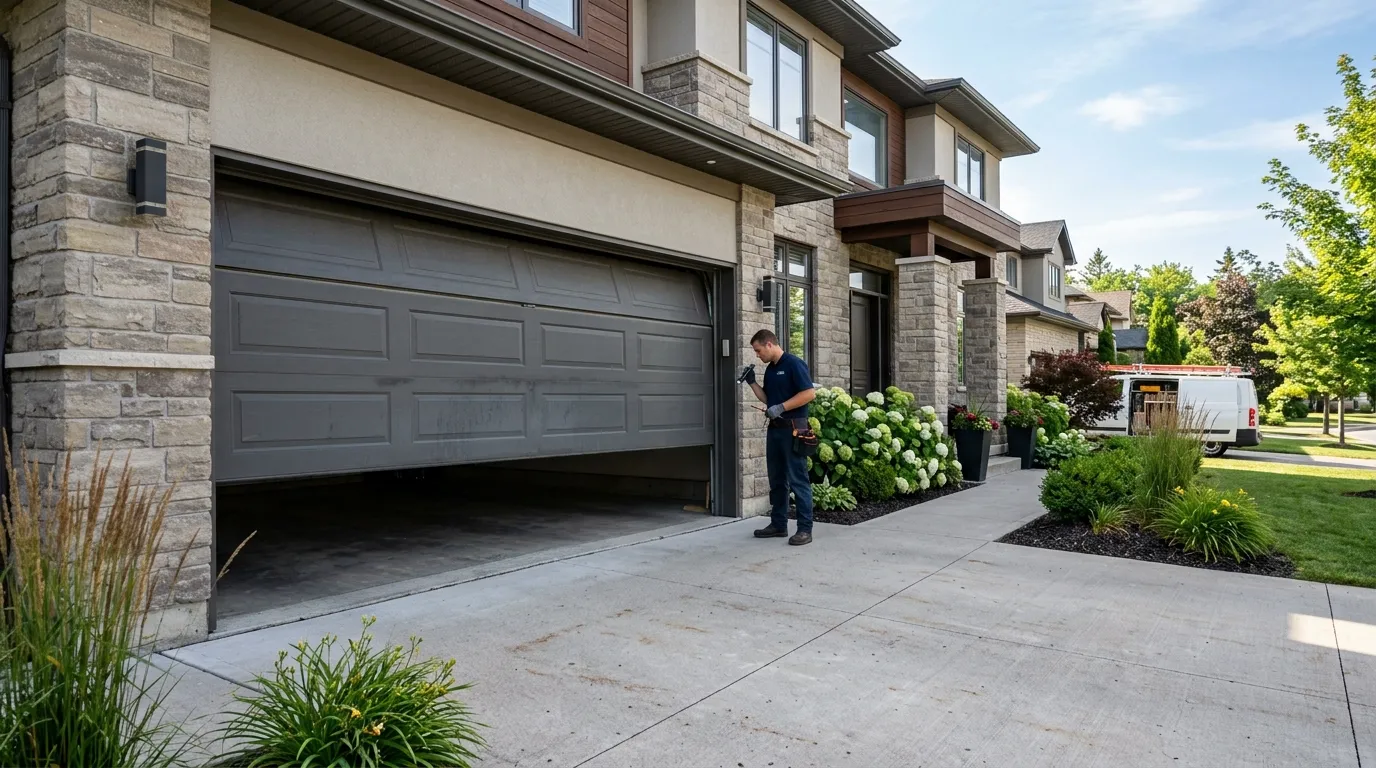
Tampa Garage Door Guide
What Makes a Garage Door Jump Its Track in Tampa
A look at why garage doors jump their tracks in Tampa homes built between 1968 and 2011, and how the area's humidity and older hardware play into it.
The Cost of This Job
There's no single number for this because the fix depends on what's actually wrong. Sometimes a track has bent from a bumped car and just needs to be pulled back into alignment and re-bolted to the jamb. Other times the rollers are shot, the track is rusted through at the mounting points, or the whole assembly has been fighting a warped door panel for years and realignment won't hold. We won't quote a track straightening job as a full track replacement, and we won't tell you a $40 fix needs a new door. With 136,621 owner-occupied houses in the service area, a lot of them are carrying original steel track from whenever the house went up, and once that steel starts to pit or the brackets pull loose from the framing, propping the track back into place is a short-term patch, not a repair. The honest answer: if your opener, springs, and cables are still sound, a track fix is usually one of the cheaper garage door calls there is. If the track failure took a cable or a roller with it, the job gets bigger. We'll tell you which one you've got before we touch anything.
When to Get Help
A door that's actually off its track usually won't move at all, or it'll bind hard partway up and stop. That's different from a door that's just noisy or slow. Watch for a visible gap between the roller and the track, a track that's pulled away from the wall bracket, or a door sitting crooked in the opening with one corner higher than the other. If you hear a grinding or scraping sound right before the door stops, that's metal on metal where it shouldn't be. Don't keep hitting the opener button if the door has stalled mid-travel - that's how a cable snaps or a panel cracks. If the door came off the track because a cable let go, there's spring tension still loaded on that door, and that's not a homeowner job; a door under tension that lets go can take a hand with it. If it's just cosmetic - a roller rattling but the door still runs true - you can usually wait and get it looked at on a normal schedule instead of calling it an emergency.
What Local Conditions Do
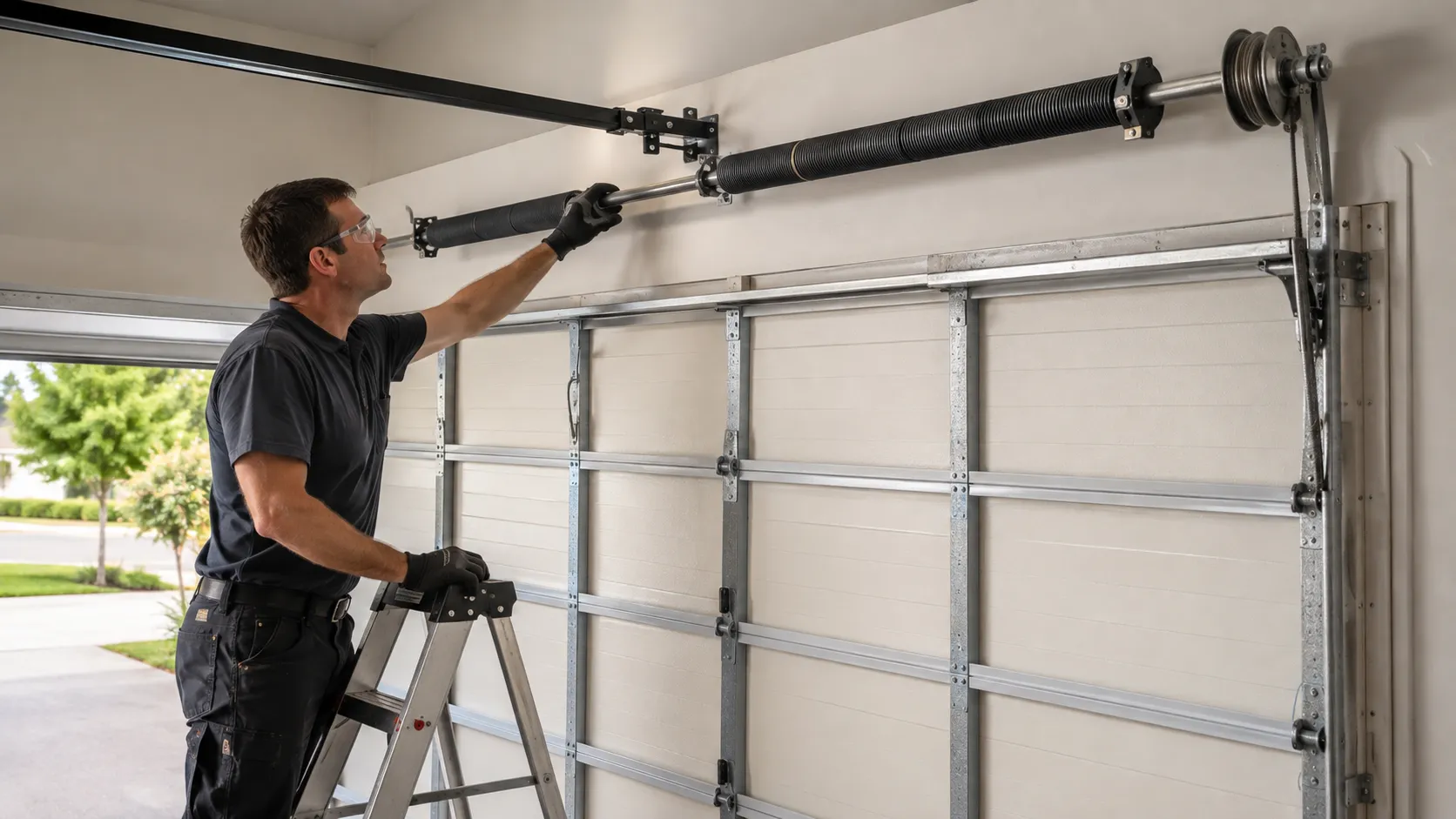
Tampa sits in a mild temperate band, which sounds easy on a garage door until you account for what mild-and-humid actually does over years. Garage interiors here don't get cold enough to keep condensation off the metal, so track sections - especially the horizontal runs near the ceican hold moisture on the surface longer than they would somewhere dry. That moisture works on the mounting bolts and the track's factory coating slowly, and once a bolt backs out or a bracket starts to rust, the track shifts under the weight of the door instead of holding it in line. Heat cycling matters too - steel track expands and contracts through the day, and over enough cycles the fasteners work loose at the same points every time. None of this is dramatic; it's slow. A door that's fine in January can be dragging on a bent flange by August because nobody caught the loose bracket in between. It's not a defect in the door - it's what this climate does to painted steel that sits in a garage for twenty or thirty years without anyone checking the hardware.
The Situation
Housing across the areas we run calls to - Northeast MacFarlane, Hyde Park, Drew Park, South Tampa, Westshore, Ybor City, Old Seminole Heights, and the rest of the 32 named areas out to Trinity and Fish Hawk - mostly went up between 1968 and 2011, with the typical build year landing around 1990. That means a huge share of the track hardware still in service was installed during the 1980s and 90s building boom, using whatever galvanized steel track was standard for a builder-grade door package at the time. It wasn't bad hardware. It just wasn't built to run maintenance-free for three or four decades in a humid coastal climate. We see the same pattern across the service area: original track, original brackets, a roller that's been dry for years, and one bump or one rusted-through bolt away from coming off the rail. With 310,521 households across the area and a median household income of $80,311, most of what we're called out for isn't neglect - it's hardware quietly aging out on schedule.
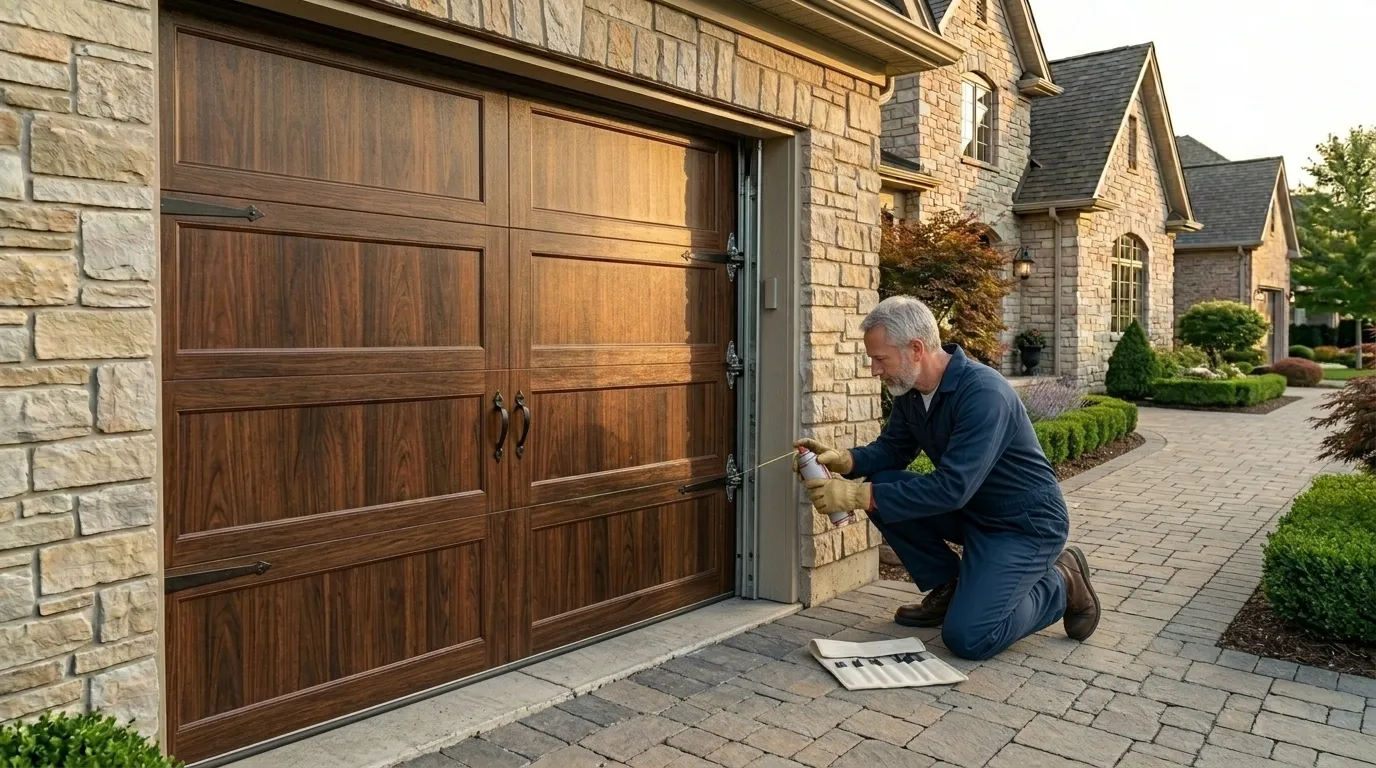
How We Can Help
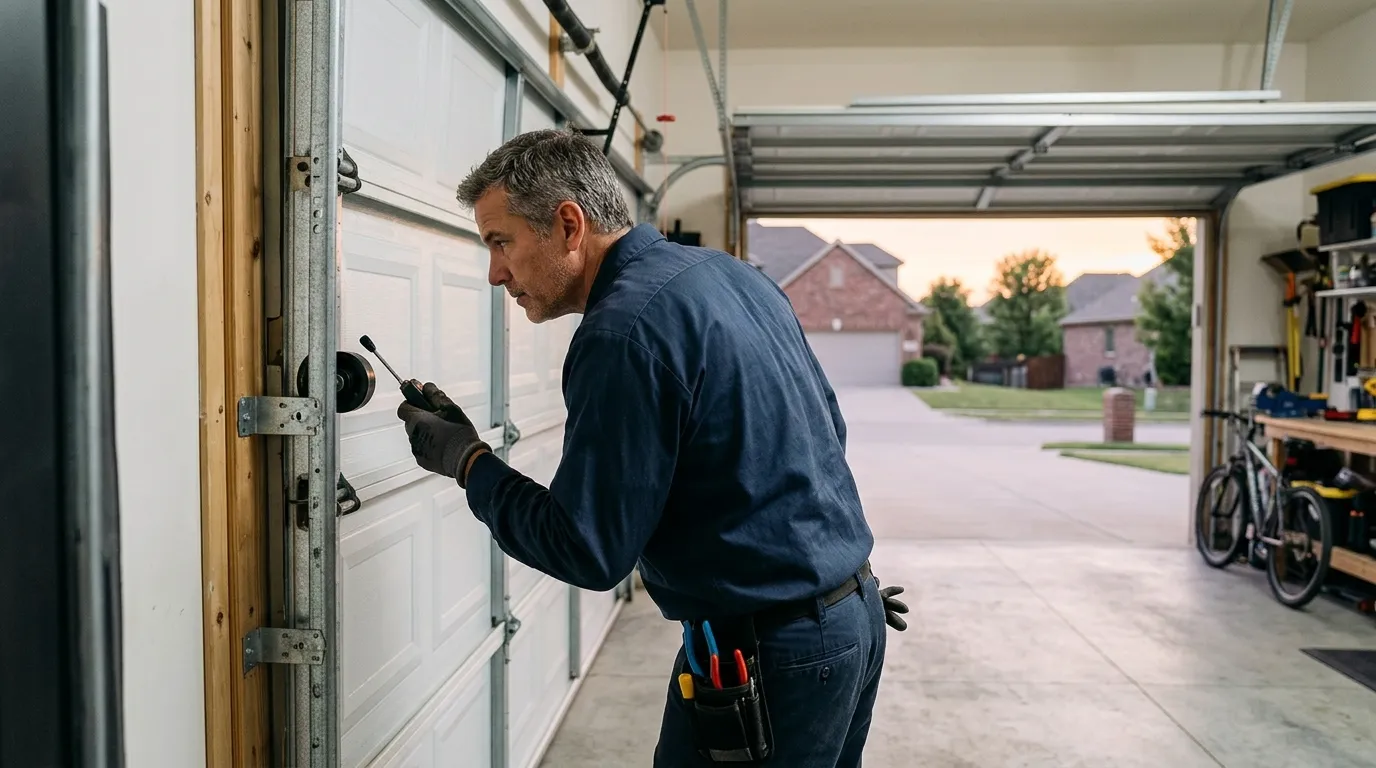
Garage Door Repair
Springs, cables, tracks, rollers, and openers fixed by a tech who explains the problem before touching anything.
Learn more →
Garage Door Installation
New sectional doors sized and installed for the housing stock actually built in this area.
Learn more →
Garage Door Service
Tune-ups, lubrication, and safety checks that catch a small problem before it becomes a service call.
Learn more →Frequently Asked Questions
Can I push a garage door back onto its track myself?
Not if the door is under spring tension, which is most doors. Pushing on a track while the door is loaded can cause the whole assembly to shift suddenly or drop. If the door is down and the opener is disconnected, sometimes a light roller has simply popped loose and can be checked safely - but if the track itself is bent or a bracket has pulled away, that's a call for someone who does this daily.
Why does my door only come off track on hot afternoons?
Steel expands as it heats up through the day. If a bracket is already a little loose from age or a rusted bolt, that expansion is sometimes enough to shift the track just past the point where the rollers stay seated. It's usually not the heat itself - it's a fastener that was already marginal, and the heat is what finally pushes it over.
Is a bent track always a replace, or can it be straightened?
Depends on how bad the bend is and where it is. A minor flare near a bracket can often be pulled back into spec. A sharp kink, or a bend right at a splice point, usually can't be trusted to hold - it'll happen again. We check the section before quoting either way rather than defaulting to a full replacement.
Have a Door That Needs a Second Opinion?
Call and describe what it is doing - we will tell you what it likely is.