
Tampa Garage Door Guide
Garage Door Repair for Tampa's 1968-2011 Housing Stock
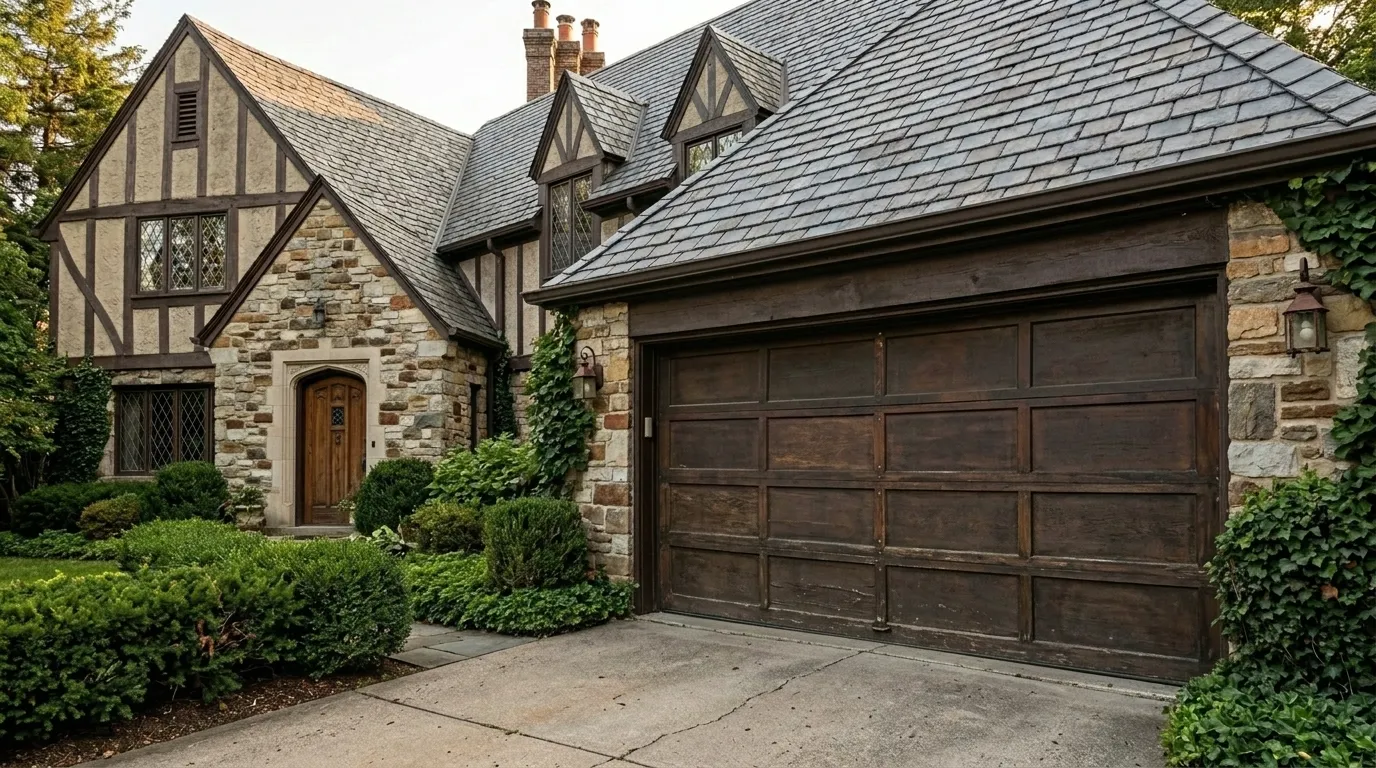
Tampa homes mostly date 1968-2011, median 1990, many with doors on houses built before insulation rules. We work on the torsion hardware and steel panels that era actually used.
The Cost of This Job
What a job costs here comes down to what's on the house, not a flat number we can quote before we see it. Tampa's housing mostly went up between 1968 and 2011, with the median build year around 1990, and that spread matters. A door from the 1970s or early 80s is often an uninsulated steel slab on side-mounted torsion hardware - doors on houses built before insulation rules were common, and those doors are cheaper to patch than to replace, because the panel itself is simple. A door from the 1990s stock that makes up most of the 32 named areas we cover is more likely a two-inch insulated panel with a different spring size, and if the spring's gone, we're matching year-appropriate hardware, not guessing.
Here's the honest part: we don't give a number over the phone for anything past a spring swap. Track alignment, roller wear, and whether the opener is original all change the job once we're standing in front of it. If your door is the original one from a house built in that 1968-2011 window, tell us that up front - it saves a trip for the wrong bracket.
When to Get Help
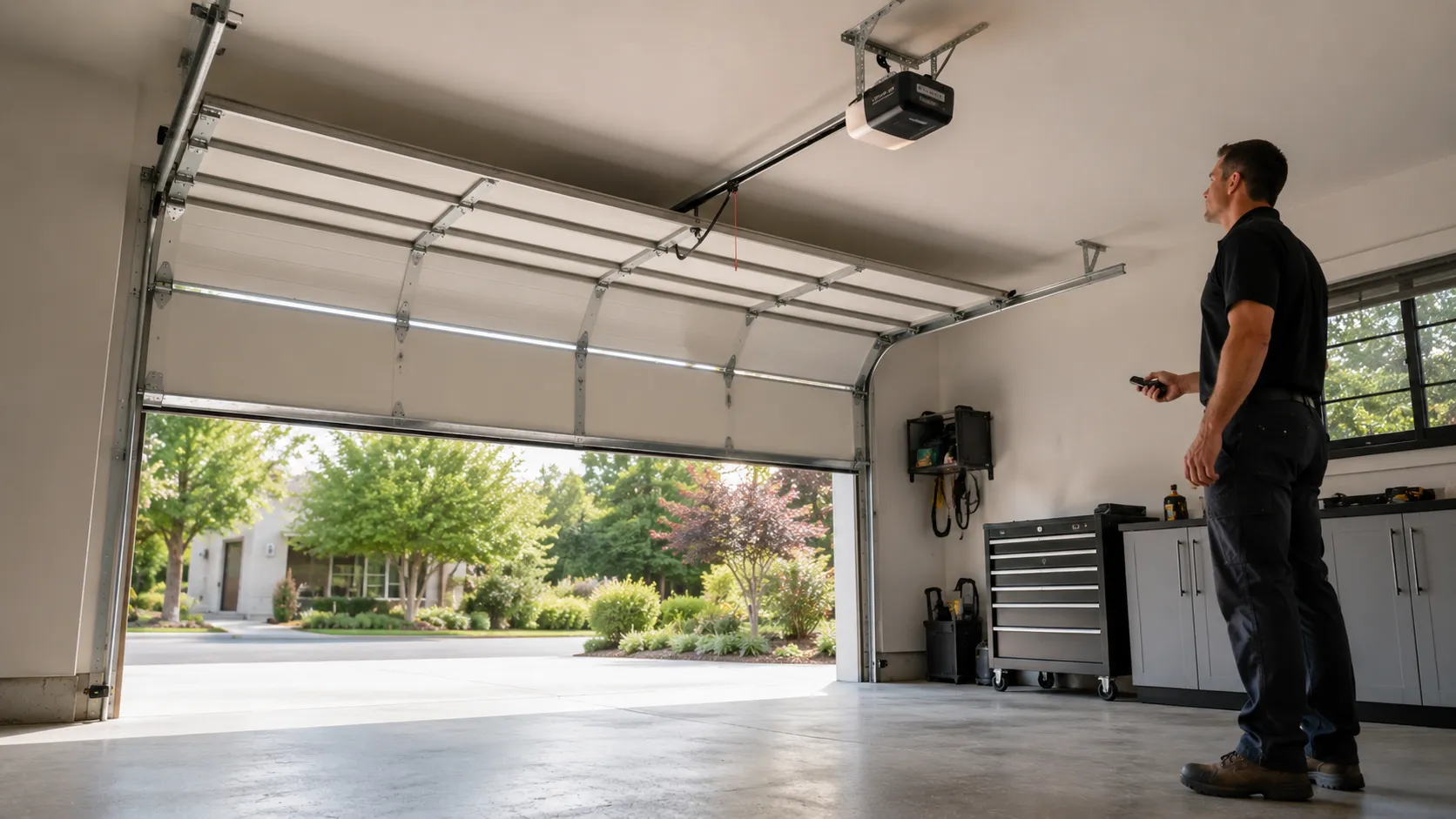
A door that's slow to close or drifts sideways on the track usually means worn rollers or a bent track - common on original hardware from houses in the 1968-2011 build range, where nothing's been swapped in decades. If the door reverses right after it touches the floor, that's the safety sensor or the close-force setting, not something to force past by holding the button down.
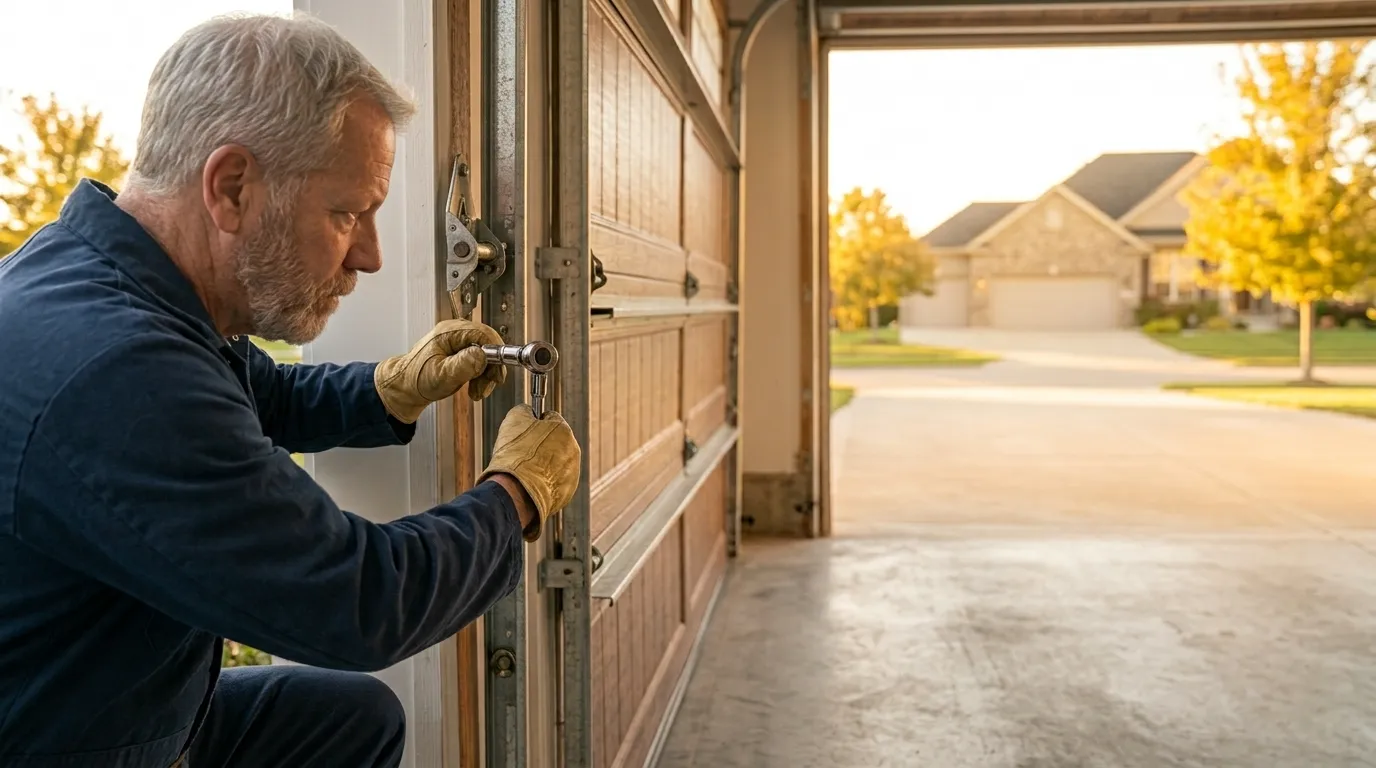
A torsion spring that's visibly gapped or has snapped clean through is not a DIY fix - that spring is under enough tension to do real damage, and on the older side-mounted setups common in this housing stock, the mounting hardware itself may be undersized for a modern replacement spring. Get help immediately if the door won't stay up on its own, if a cable has come off the drum, or if you hear a bang and then silence. None of those get better by waiting, and a door stuck open is a security problem, not just an inconvenience.
What Local Conditions Do
Tampa sits in a mild temperate band, which sounds like an easy climate for a garage door and mostly is - no hard freeze to crack a slab, no deep winter to seize an opener chain. But mild and humid isn't the same as mild and dry. Steel tracks and spring coils here spend most of the year in moisture-heavy air, and on the older doors from this area's 1968-2011 housing stock, that means surface rust on hardware that was never galvanized to a modern standard.
The practical effect: torsion springs on original 1980s and 90s installations tend to lose tension unevenly rather than snap clean, so one side sags before you notice a real problem. Weatherstripping at the bottom of the door also breaks down faster in sustained humidity than it would in a drier climate, letting water track in during heavy rain. None of this is dramatic, but it's steady wear that a dry-climate maintenance schedule won't catch, because it's not built for what humidity does to steel over thirty-plus years.
The Situation
This is a service area built out mostly between 1968 and 2011, median year 1990, and that shows up house to house. Close in - Hyde Park two miles southeast, Drew Park two miles west-northwest, Westshore three miles west, Ybor City three miles east - you'll find older stock alongside newer infill, so two houses on the same block can have completely different door generations. Farther out toward Egypt Lake-Leto, Town 'n' Country, and East Lake-Orient Park, the 1980s and 90s stock that dominates the broader area is more consistent.
Across the service area there are 310,521 households, with 136,621 of those owner-occupied houses - the standalone garages we actually work on, as opposed to condos or rentals where the door isn't the owner's call. Median household income sits at $80,311, which tracks with what we see on the road: most calls are repair and hardware replacement on doors that have another decade in them, not full teardown-and-rebuild jobs. That's the shape of the work here, and it's shaped by the age of the housing, not by trend.
How We Can Help
Garage Door Repair
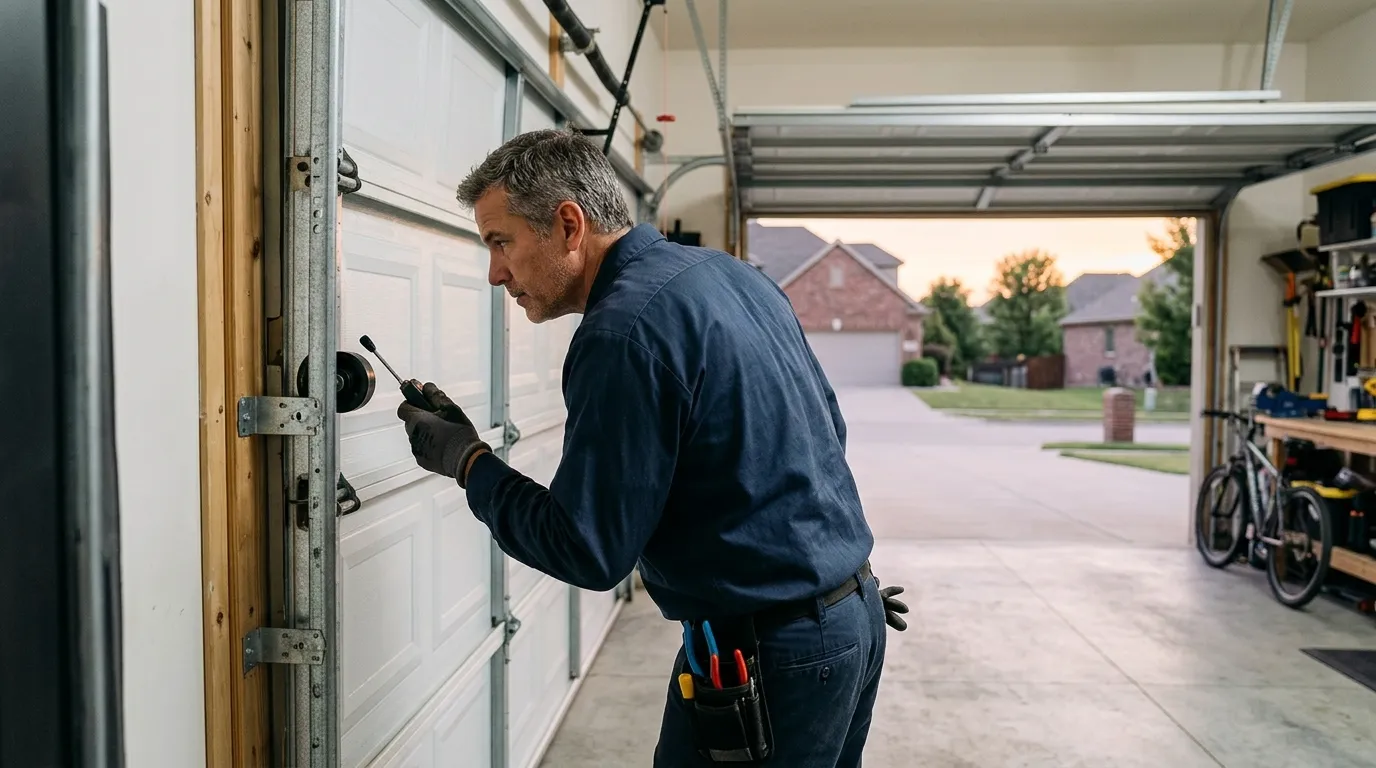
Springs, cables, tracks, rollers, and openers fixed by a tech who explains the problem before touching anything.
Learn more →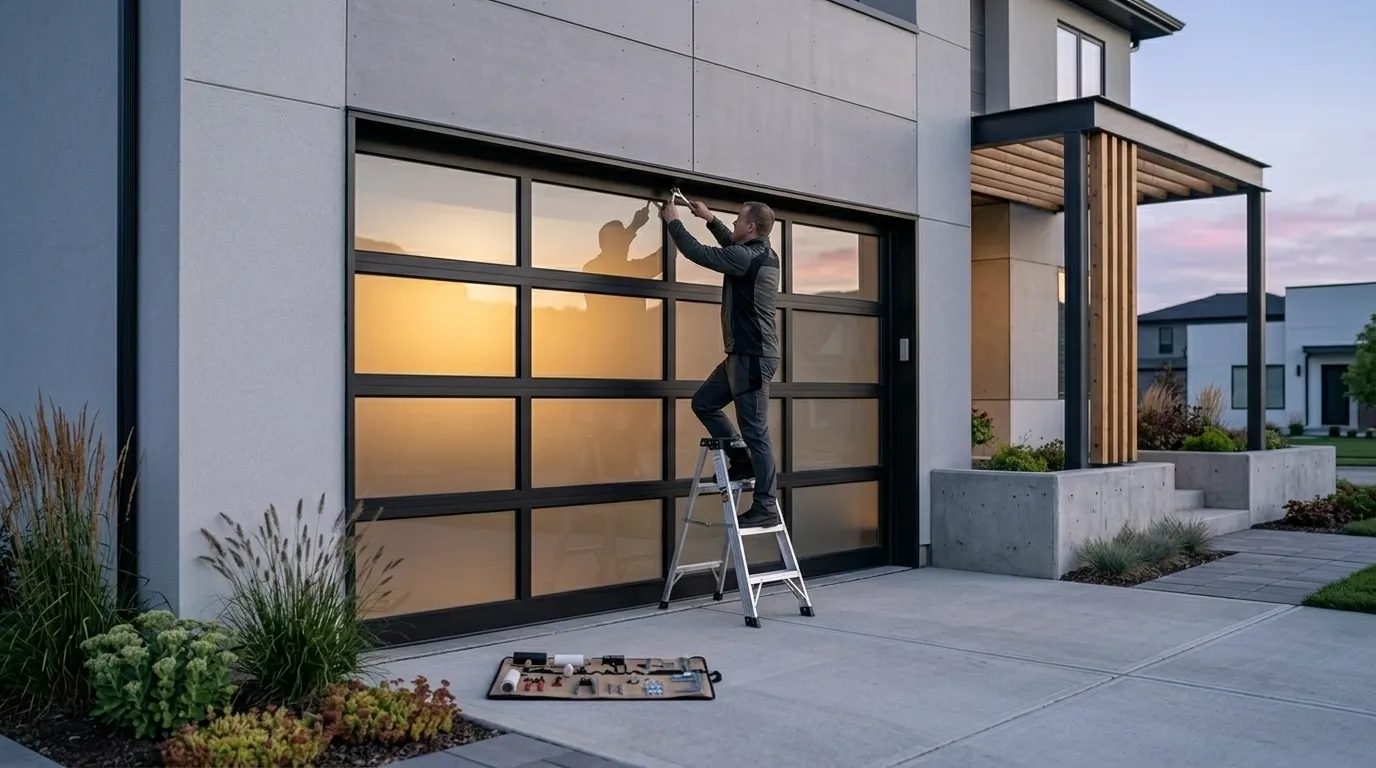
Garage Door Installation
New sectional doors sized and installed for the housing stock actually built in this area.
Learn more →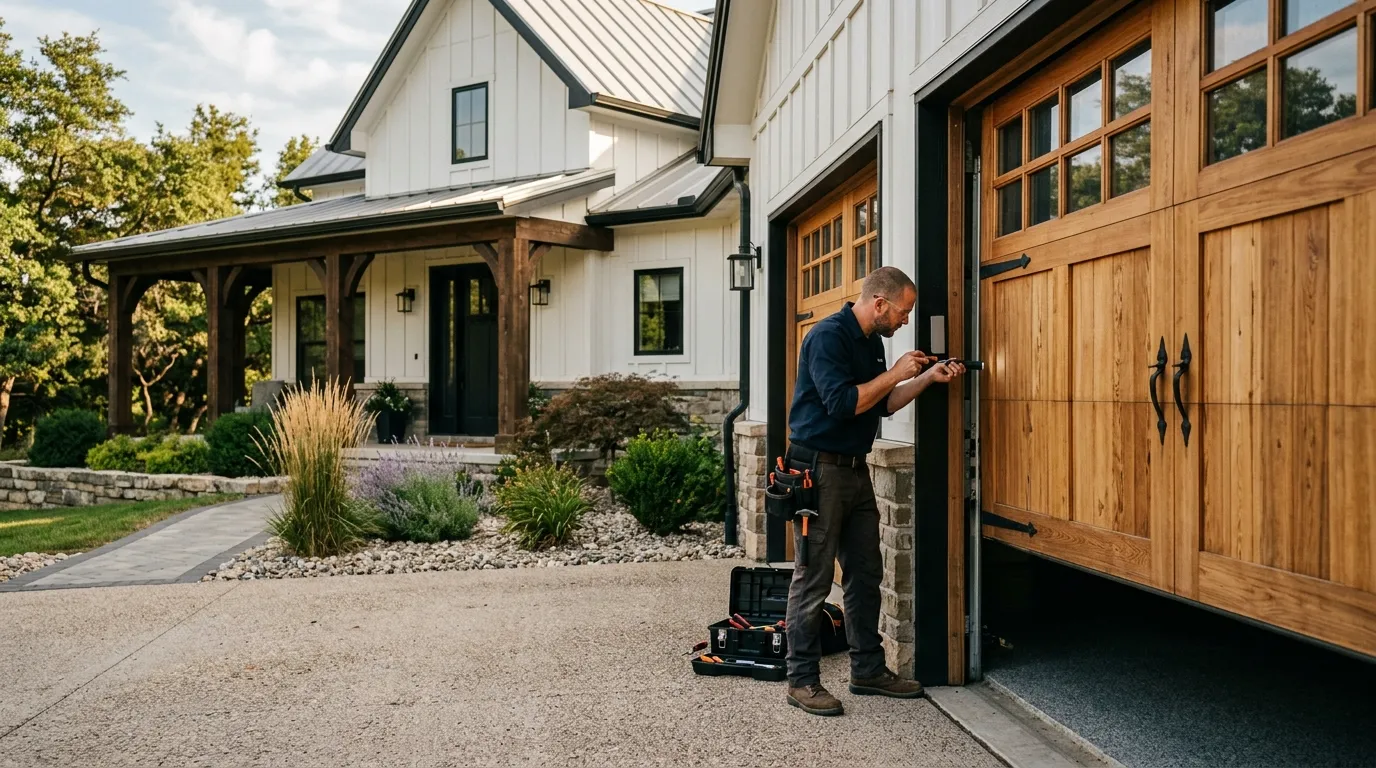
Garage Door Service
Tune-ups, lubrication, and safety checks that catch a small problem before it becomes a service call.
Learn more →Frequently Asked Questions
Is my garage door old enough that parts won't match anymore?
If your house was built in the earlier part of Tampa's 1968-2011 range, especially before the 1990s, the door may be an uninsulated steel panel on side-mounted torsion hardware. Parts for that setup still exist, but they're not the same stocked items as a 2000s-era door, so a repair can take an extra call to source the right spring or bracket.
Does Tampa's humidity actually damage garage door hardware?
Yes, gradually. The mild temperate climate here doesn't freeze or crack hardware the way a cold winter does, but sustained humidity causes surface rust on torsion springs and tracks over years, especially on original hardware from older houses. It's slow wear, not sudden failure, which is why it often goes unnoticed until the door starts sagging on one side.
Can you give me a repair price over the phone?
Not for anything beyond a straightforward spring swap. Cost depends on the door's age, whether it's insulated, and what hardware is actually installed, and that varies a lot across houses built between 1968 and 2011. We'll give you a real number once we've looked at the door in person.
Have a Door That Needs a Second Opinion?
Call and describe what it is doing - we will tell you what it likely is.