
Tampa Garage Door Guide
What That Noise From Your Garage Door Is Actually Telling You
Grinding, popping, or screeching from your Tampa garage door usually traces back to the hardware era of the house. Here's what the sound is actually telling you.
The Cost of This Job
We can't quote a number here without seeing the door, and any site that hands you a flat price sight unseen is guessing. What we can tell you is what drives the cost up or down. Most of the houses this company services were built between 1968 and 2011, with the typical home going up around 1990, and that range matters more than people expect. A door from that era usually runs original torsion hardware sized to builder-grade specs from the 1980s and 90s - springs, drums, and end bearings that were never meant to be swapped piecemeal. When one part on that setup fails, the rest of the assembly is often close behind it, which turns what sounds like a small fix into a full hardware replacement. Newer doors, closer to the 2011 end of that build range, tend to use standardized parts we can source and swap fast, which keeps the job smaller and the bill lower. The honest version: if your door is on original hardware from the 80s or 90s, budget for the whole spring-and-drum assembly, not just the one part that's making noise. We'll tell you straight which one you're looking at before we start anything.
When to Get Help
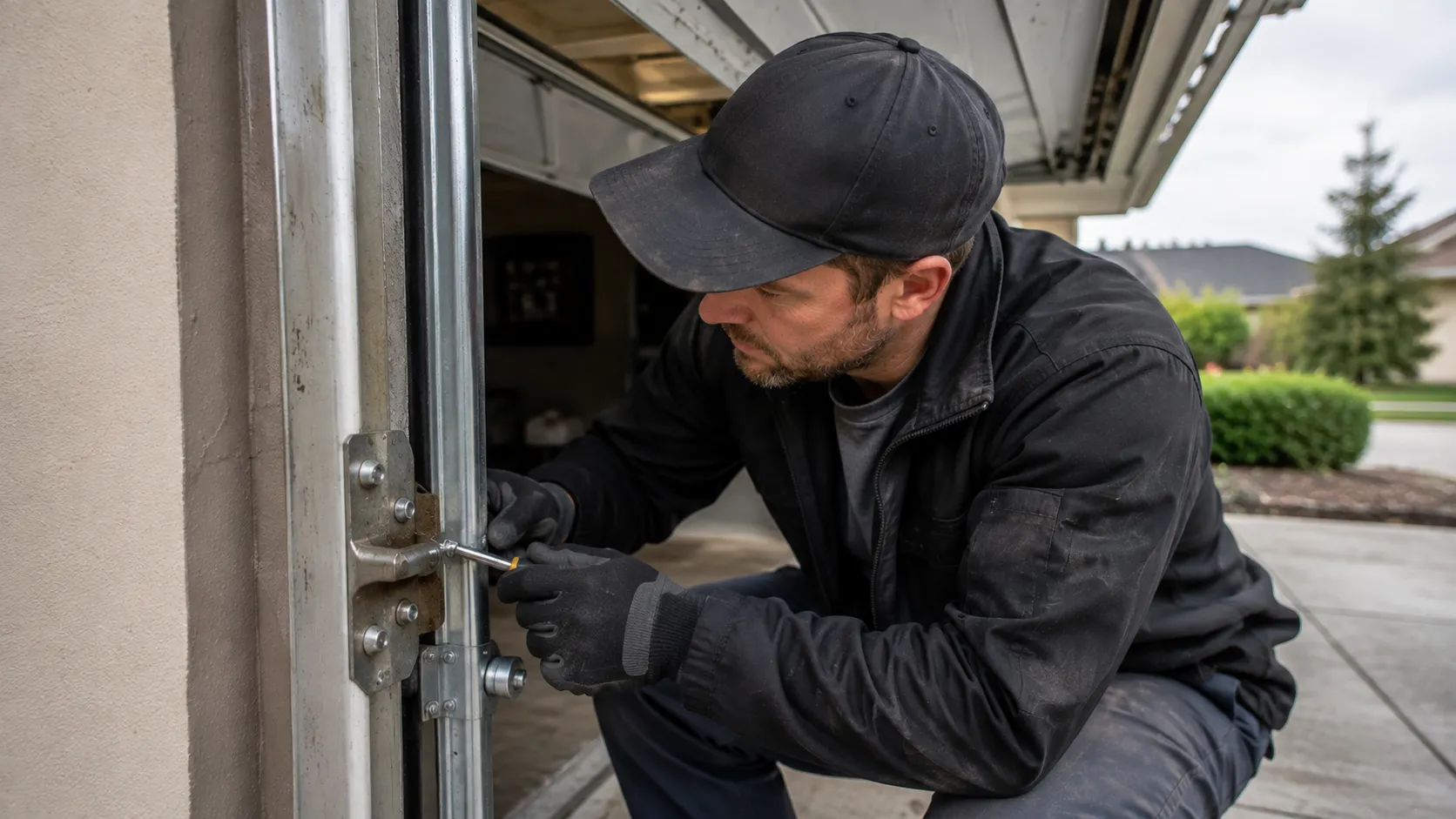
A garage door doesn't fail silently. It tells you first. A rhythmic thump once a rotation usually means a flat spot on a roller or a bent track section - annoying, not urgent. A sharp metallic pop, especially on a cold morning even in our mild climate, can mean a torsion spring is close to going, and that's not a wait-and-see item; a spring under full tension that lets go can bend the shaft or hurt someone standing nearby. A grinding or screeching sound when the door travels usually points to a dry or worn bearing plate, common on doors carrying original hardware from the 1980s-90s stock that makes up most of this area's housing. A loud bang followed by the door refusing to move is almost always a broken cable or snapped spring - stop using the opener and call before you force it. If the noise only happens on the way down, check the bottom brackets and rollers first. If it happens the whole travel, it's usually the spring or the shaft bearings. Either way, don't run the opener repeatedly trying to diagnose it yourself - that's how a bent track becomes a torn-off bracket.
What Local Conditions Do
Tampa sits in a mild temperate band, without the hard freeze-thaw cycles that crack hardware elsewhere. That's the good news: you're not fighting ice-jammed tracks or metal that contracts and snaps in January. The trade-off is humidity. Steady moisture in the air works on unlubricated torsion springs and hinge pins slowly and constantly, rather than in one dramatic cold snap, so corrosion and dried-out grease show up as noise well before they show up as failure. On homes built in the 1968-2011 range - the bulk of what's out there - that means the original hardware has had decades of humid air working on it with no hard winter to mask the wear. You'll hear it as a dry squeal on the hinges or a grinding hum on the rollers long before anything actually breaks. Because the climate here doesn't force a hard reset on hardware the way freeze cycles do up north, doors can run for years sounding progressively worse without an obvious breaking point - which is exactly why the noise itself is the signal worth acting on, not waiting for a full stop.
The Situation
This area covers a wide mix of housing, from tight-in neighborhoods like Hyde Park, two miles southeast of the shop, and Ybor City, three miles east, out to Egypt Lake-Leto four miles away and Temple Terrace eight miles out. Homes in Egypt Lake-Leto, four miles from the shop, and Temple Terrace, eight miles out, share that same 1980s-90s hardware era common across roughly 136,621 of the 310,521 owner-occupied households in the wider service area. Median household income across the area runs $80,311, and most of these households own rather than rent, which usually means longer ownership and a door that's been through more than one homeowner's maintenance habits, or lack of them. Farther out toward Odessa, Trinity, and Fish Hawk, newer construction means newer hardware and quieter doors on average. Closer in, older stock means more calls about noise than about outright failure - the hardware is old enough to complain loudly before it quits. That spread, from three-mile-out Ybor City to eighteen-mile-out Trinity, is why we ask where you are and roughly when the house was built before we guess at what's making the sound.
How We Can Help
Garage Door Repair
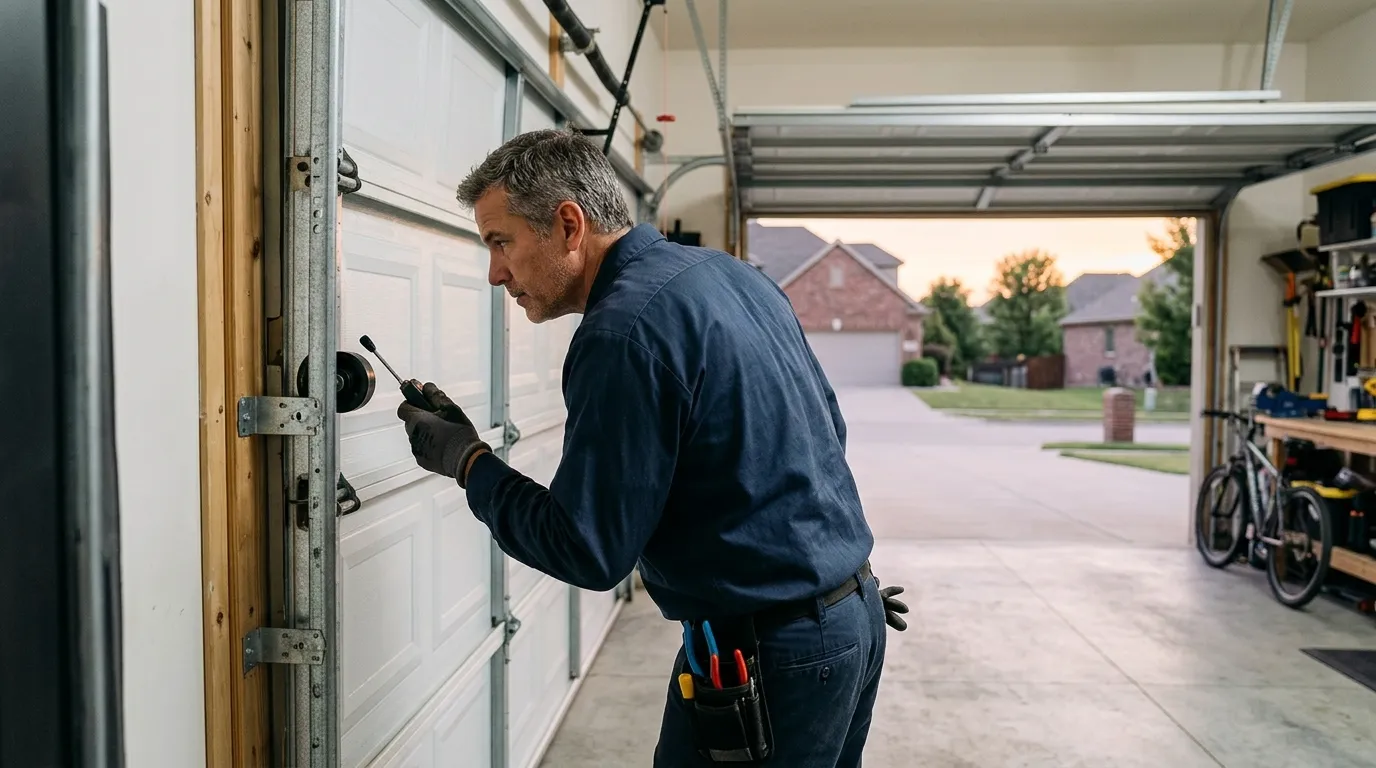
Springs, cables, tracks, rollers, and openers fixed by a tech who explains the problem before touching anything.
Learn more →
Garage Door Installation
New sectional doors sized and installed for the housing stock actually built in this area.
Learn more →
Garage Door Service
Tune-ups, lubrication, and safety checks that catch a small problem before it becomes a service call.
Learn more →Frequently Asked Questions
Why does my garage door squeal only in the morning?
Humidity sits heavier overnight and settles into unlubricated hinges and rollers, so dried-out hardware complains loudest on the first cycle of the day. It usually quiets down after a few openings once things loosen up, but that's wear talking, not the door fixing itself - lubrication or a hinge swap solves it for good.
Is a loud bang always a broken spring?
Not always, but it's the most common cause, especially on original 1980s-90s torsion hardware still running in a lot of houses here. A cable snapping sounds similar. Either way, stop using the opener immediately and don't try to open it manually until someone's looked at it - a loaded spring or cable under tension isn't safe to guess at.
My door is quiet but slow - is that a problem?
Slow travel with no noise usually points to opener strain rather than hardware, often because springs have weakened enough that the opener is doing more lifting than it should. It's not an emergency, but it accelerates opener wear, so it's worth a look before the motor gives out on top of the spring issue.
Have a Door That Needs a Second Opinion?
Call and describe what it is doing - we will tell you what it likely is.