
Maintenance & Tune-Up in Town N Country
Garage Door Maintenance for Town 'n' Country Homes
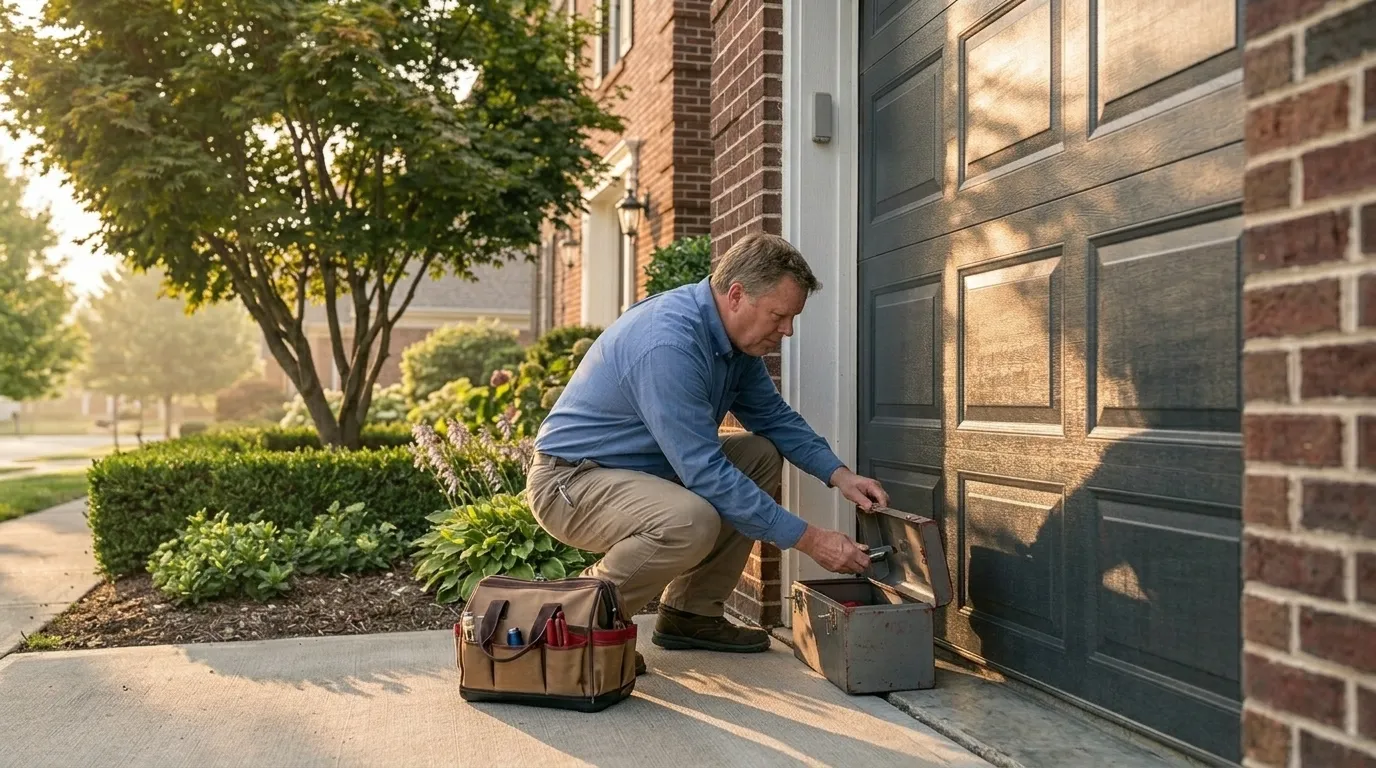
Garage door tune-ups for Town 'n' Country, where most homes date to the 1980s, serviced from Tampa 7 miles away - springs, rollers, cables, and opener checks.
What Happens When You Call
-
1
Call or Request a Quote
Tell us what the door is doing and roughly how old the house is - that alone points us toward the likely part before a truck leaves.
-
2
On-Site Diagnosis
A tech checks the spring, cables, tracks, and opener in person and tells you plainly what is actually wrong.
-
3
Straight Price, No Surprises
You get a number before any work starts. It covers parts and labor, nothing added after the fact.
-
4
Fixed the Same Visit
Most repairs are done in one trip. If a part needs sourcing, we tell you that upfront instead of guessing.
How It Shows Up
The complaint we hear most out of Town 'n' Country isn't a dead opener - it's a door that groans on the way up, or one side that dips before the other catches. That's a spring losing tension unevenly, and it shows up here more than in newer builds because of what's actually hanging in these garages.
Most houses in Town 'n' Country went up around 1984, six years before the median across the wider Tampa service area (1990). A door installed then, or replaced once since, is more likely to be running an extension-spring setup over the track rather than a torsion bar, and the opener behind it has probably already been swapped once for a chain-drive unit with a bolted-on photo-eye retrofit rather than a factory sensor.
None of that is a defect. It's just older hardware doing what older hardware does - wearing at the pivot points, the cable ends, and the spring coils faster than a door installed in the last ten years.
The other pattern: doors that look fine but drift out of balance slowly, because nobody's touched the spring tension since it was hung. You don't notice a quarter-inch of drift a year. You notice it in year eight, when the opener is straining and the gears inside it are the ones actually failing.
Stocked Parts
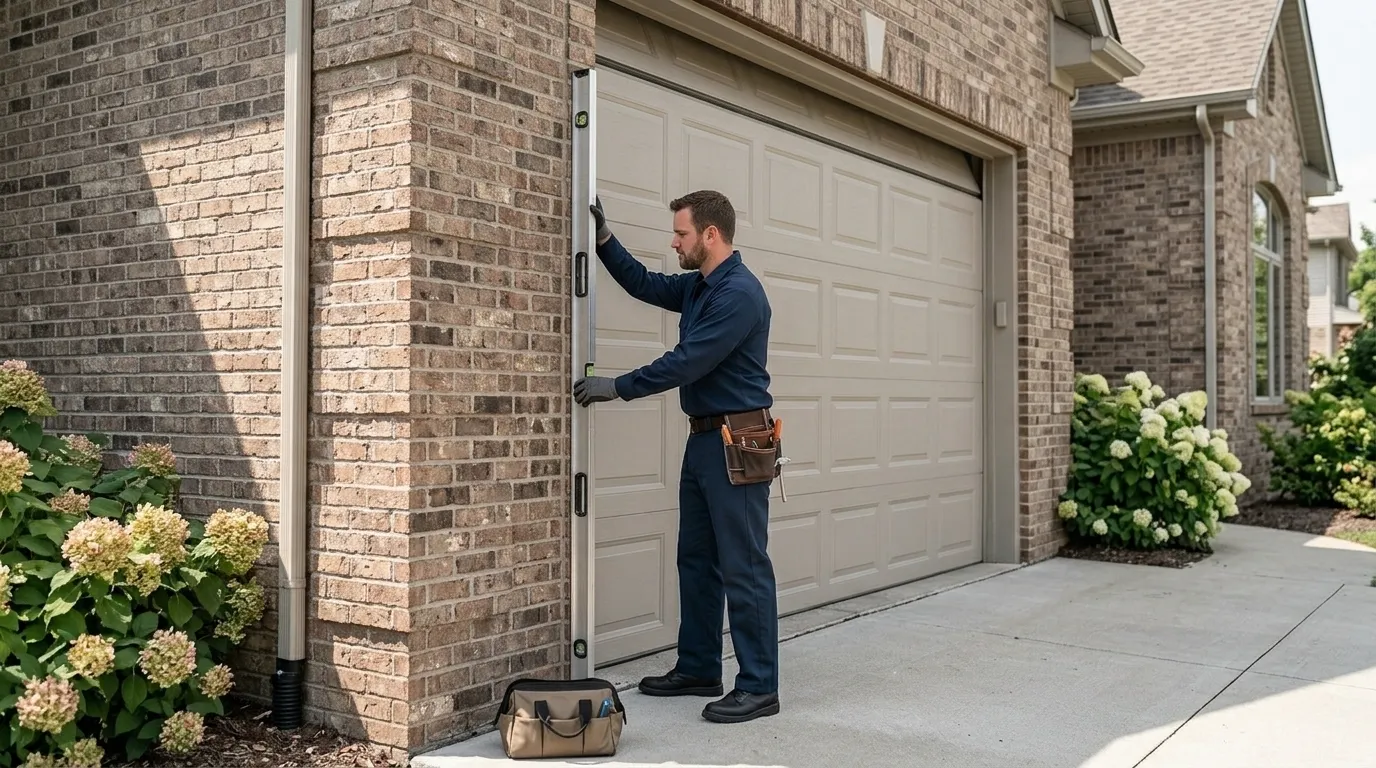
For doors from this era, the parts that fail are ordinary: rollers, lift cables, hinges, and standard-size extension or torsion springs sized to a single or double door from the 1980s-90s production run. Those are common stock, not special order.
What isn't always on the truck: low-headroom torsion conversion kits, obsolete track brackets from a manufacturer that's since changed its hole spacing, or a specific opener logic board for a model that's been discontinued for years. If a door has a part like that, we'll say so on-site rather than guess at a fix, and it may mean ordering in before the job finishes.
That's the honest limit of a maintenance visit versus a full tear-out: we service what's there. If what's there is a spring or cable style nobody makes anymore, sometimes the right call is replacing the whole assembly instead of chasing a part.
Doing It Yourself
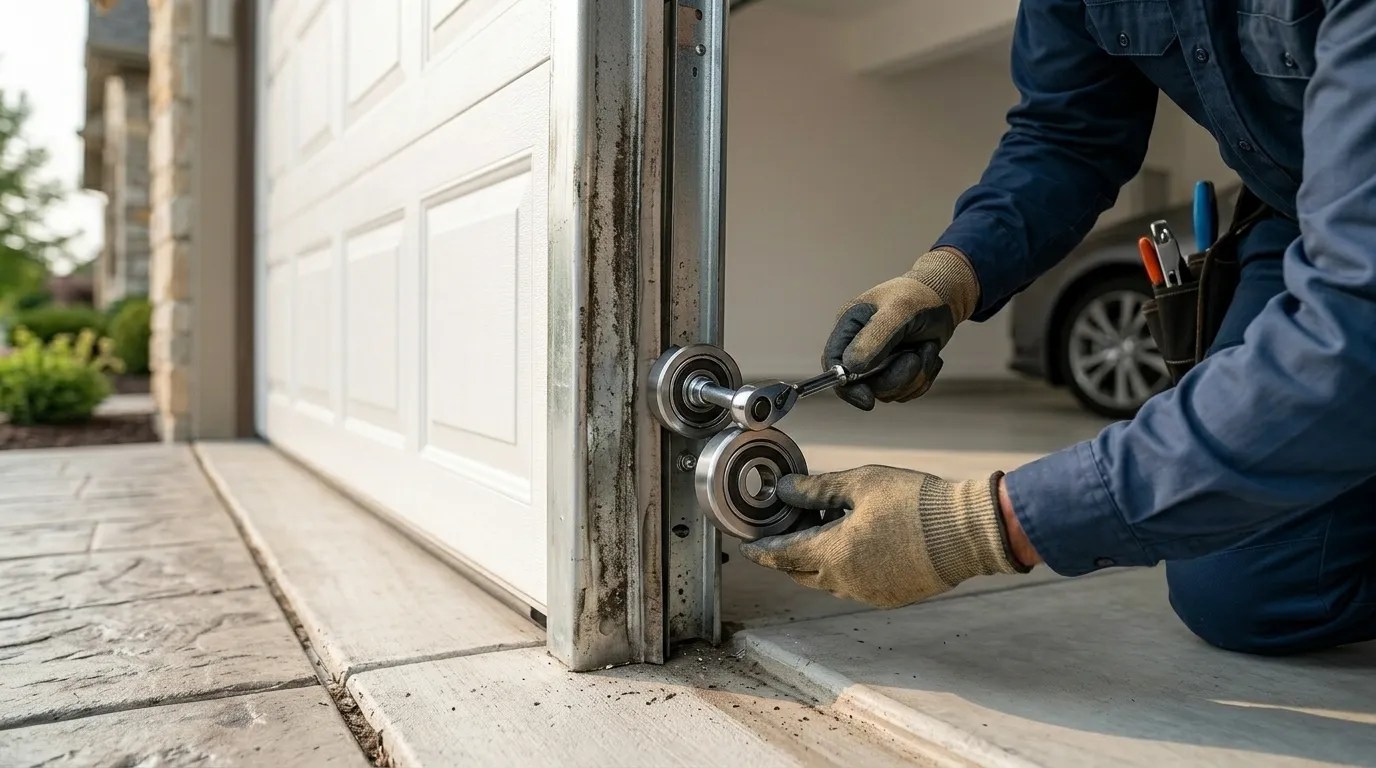
A homeowner can do real maintenance without touching a spring. Wipe down the tracks and check for dents or debris. Lubricate the rollers and hinges with a garage-door-specific lubricant, not household oil, which attracts grit.
Test the auto-reverse safety feature by laying a 2x4 flat under the door and confirming it reverses on contact. Look at the cables for fraying near the drum.
What not to touch: the torsion spring itself, or the extension springs' fixed anchor points. These are under load whether the door is open or closed, and adjusting them without the right bars is how people end up with real injuries, not close calls. If a door feels heavy to lift by hand with the opener disconnected, that's the sign the spring tension is off - call it in rather than crank it yourself.
A yearly visual check plus lubrication covers most of what a homeowner can safely manage between professional visits.
The Cost of This Job
We can't give a number here without a real quote in front of the door - every job depends on what's actually worn versus what's still good. What we can tell you is what drives the cost up or down on a maintenance visit for a house like this: how many of the moving parts (rollers, cables, hinges) need replacing versus just adjusting, whether the spring needs re-tensioning or full replacement, and whether the opener's safety sensors need realignment or a swap.
Given that the median household income in Town 'n' Country ($68,350) runs below the $80,311 median across the broader Tampa service area, deferring maintenance until something breaks is common - and it's usually the more expensive path, since a neglected spring often takes the opener's gears down with it. A tune-up visit catches the wear before it becomes a failure, which is generally the cheaper problem to have.
How Long You Are Without the Door
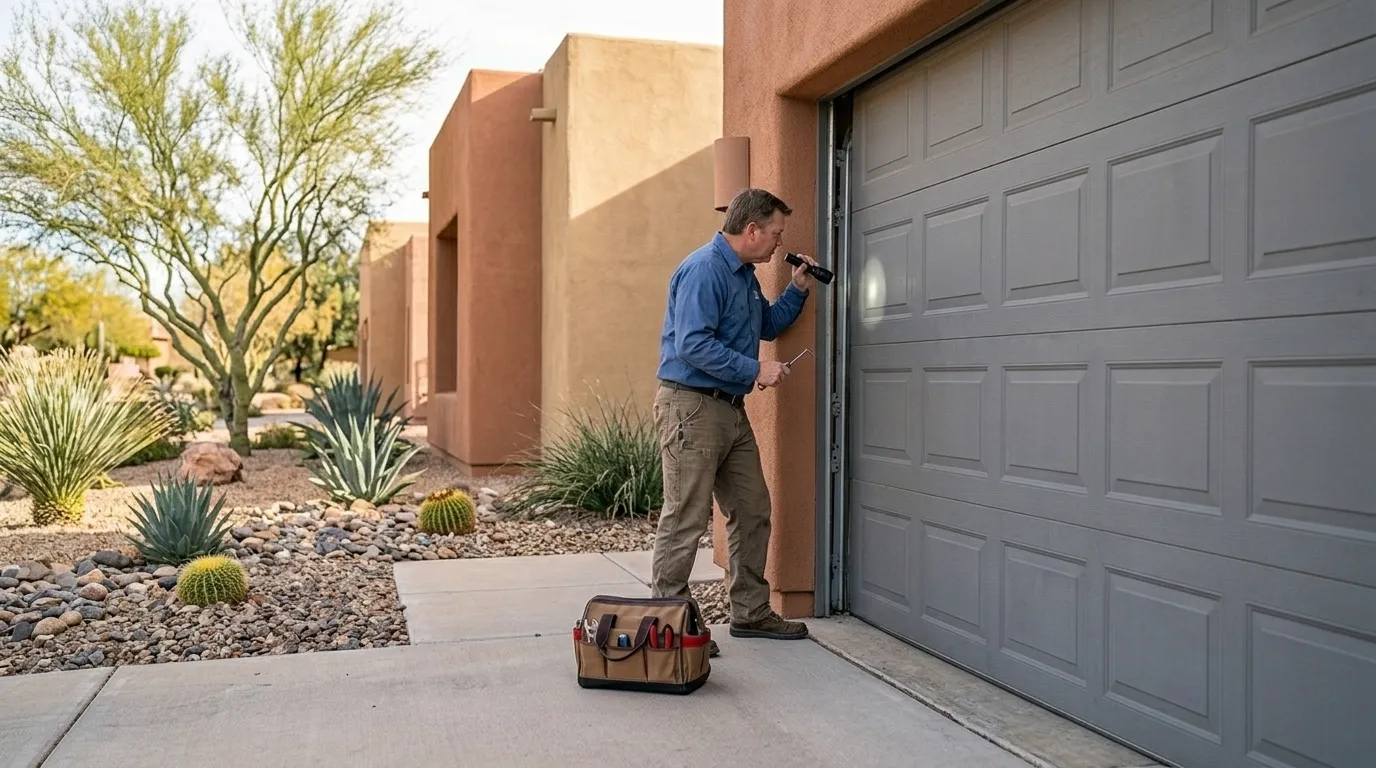
Maintenance is not the same job as a repair, and that distinction matters for how long the door is out of commission. A tune-up - lubrication, balance check, hardware inspection, sensor test - doesn't take the door out of service. It stays operable through the visit.
Where that changes is if the check turns up something that can't wait: a spring near the end of its cycle life, or a cable fraying at the drum. In that case the door may need to stay down for the rest of that visit rather than get put back into daily use with a part that's about to fail. We won't send a door back into service on hardware we don't trust, even if that means the visit runs longer than a straight tune-up would.
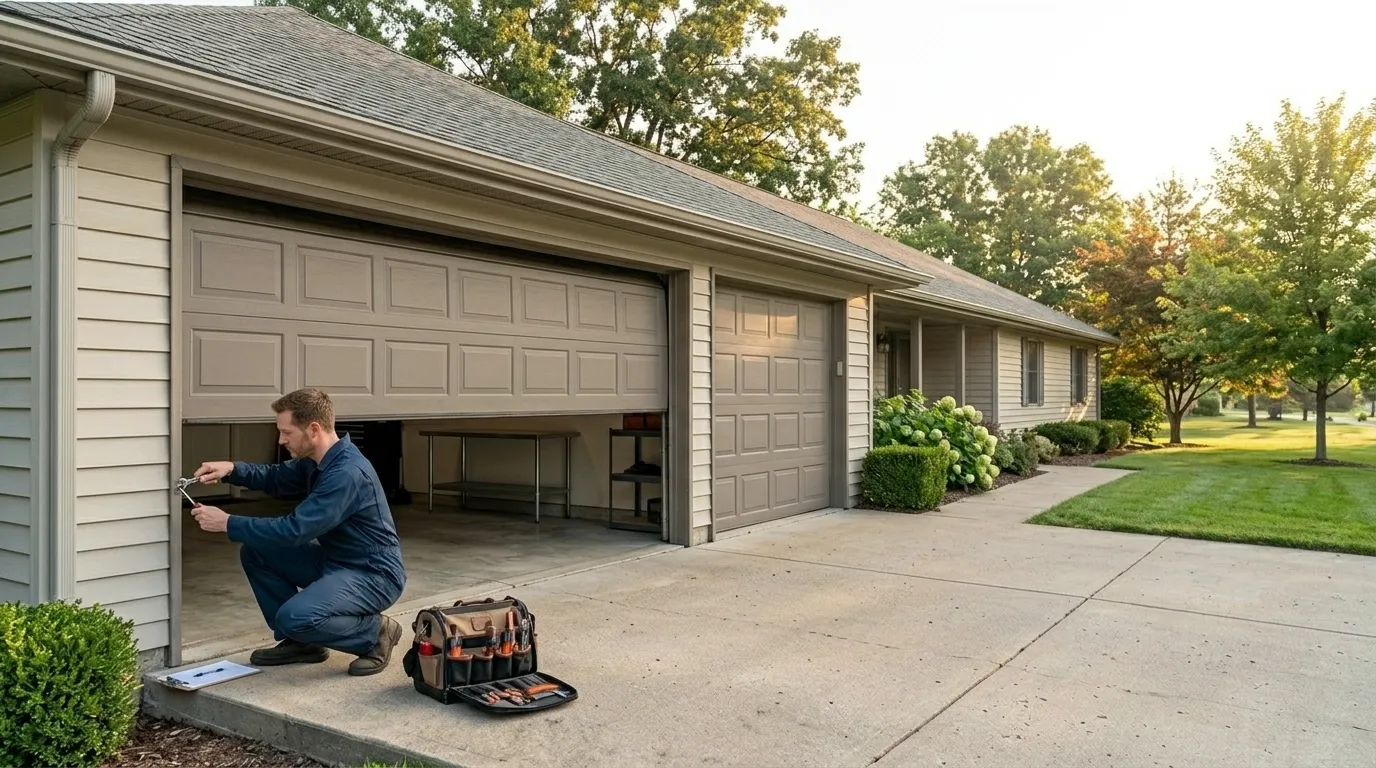
What the Repair Takes
When a maintenance check turns into a repair, the scope is usually one of three things on a house this age: a spring replacement (torsion or extension, matched to the door's weight and 1980s-era track hardware), a cable and roller set that's worn past adjustment, or an opener sensor realignment where the photo-eye brackets have shifted over the years.
Because a lot of these doors are running a retrofit opener rather than the original unit, part of the job is often just confirming the safety reverse still works to spec - that's not always true on a unit that's been swapped once already without every accessory updated to match.
We travel out from Tampa for this work, about seven miles for a Town 'n' Country address, and we'll tell you plainly on-site if a repair is worth doing versus if the door's at the point where replacement makes more sense than another round of parts on 40-year-old track.
Why Town N Country Calls Us
Other Garage Door Services in Town N Country
Talk to a Town N Country Technician First
Describe what the door is doing and get a straight answer on what it likely needs.
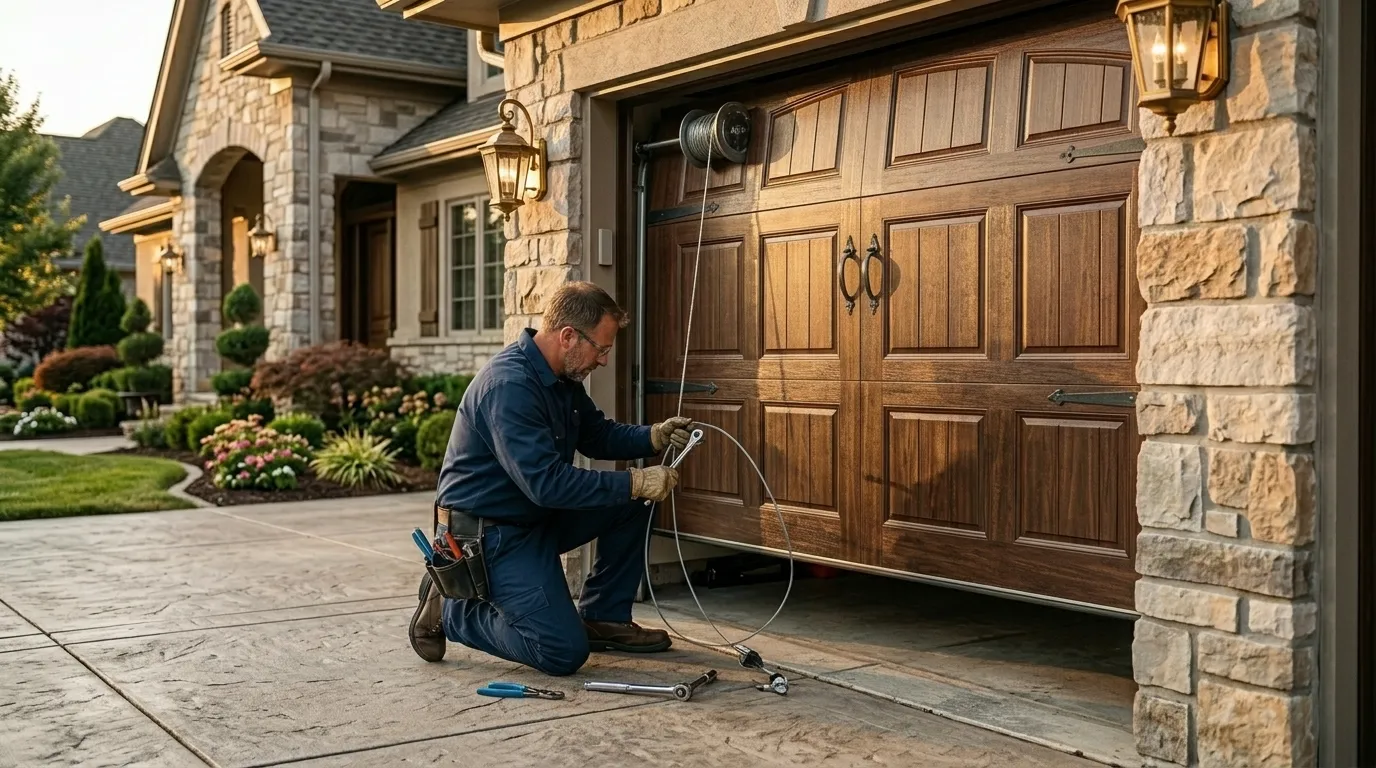
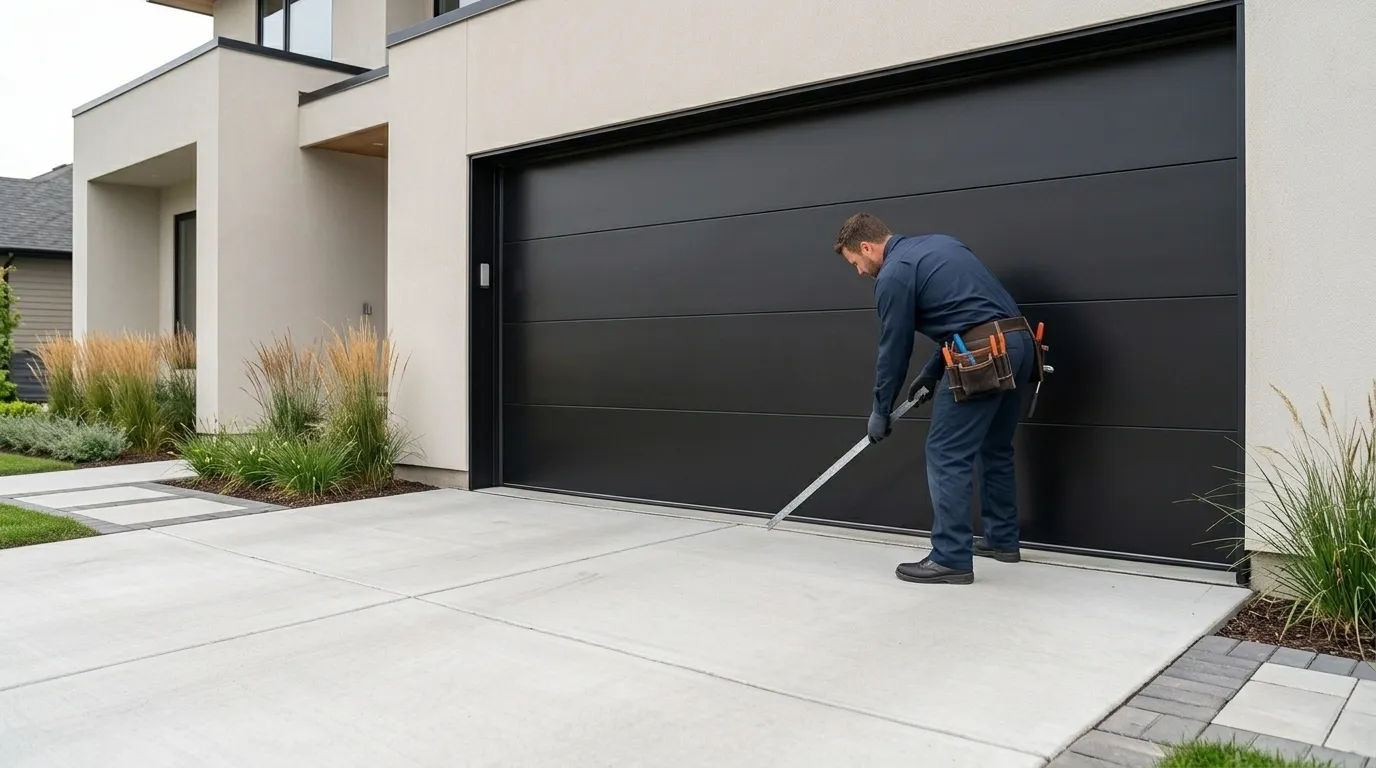
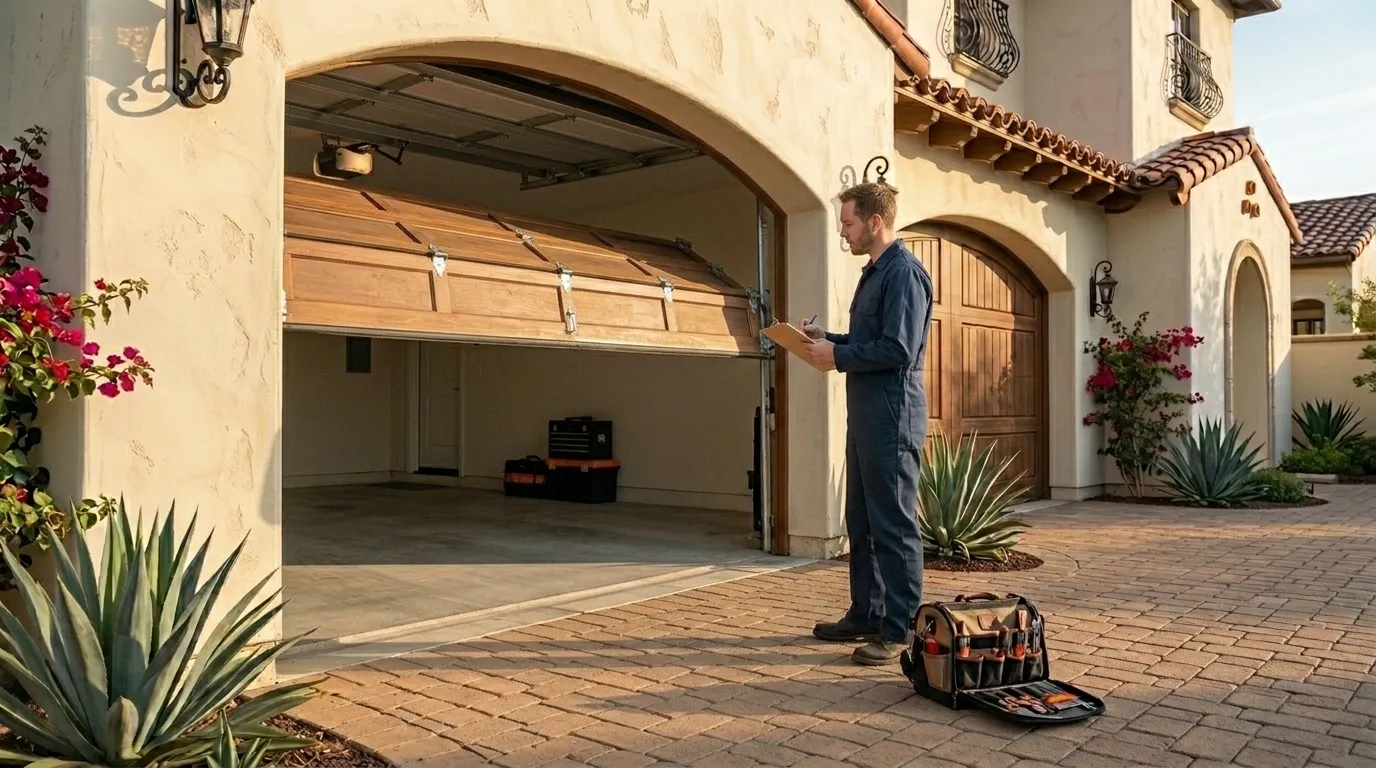
Recent Work in Town N Country
A look at jobs our crew has been on nearby.
Frequently Asked Questions
How often should a garage door in Town 'n' Country get serviced?
Once a year is standard for most doors, but if yours is original to a house built in the early-to-mid 1980s and hasn't been checked in a while, it's worth moving that up - the spring and cable wear on doors this age tends to accelerate once it starts, rather than stay gradual.
Do you carry parts for older garage doors on the truck?
For common wear items - rollers, cables, hinges, standard torsion and extension springs sized to 1980s-90s doors - yes, those are routine stock. Specialty low-headroom hardware or a discontinued opener board may need to be ordered after we've seen the door.
Is a noisy door in Town 'n' Country usually a big repair?
Not always. A lot of noise on doors this age comes from dry rollers and hinges, which is a lubrication fix, not a spring or cable problem. We check both on a maintenance visit before assuming it's the expensive fault.
Can I put off garage door maintenance if the door still works?
You can, but a door that's drifting out of balance without anyone noticing usually ends up straining the opener's gears before the spring itself fails outright. Catching it early is generally the cheaper of the two problems.
Need Maintenance & Tune-Up in Town N Country?
Call now for straight answers on cost and timing.