
Service
Garage Door Roller Replacement Around Tampa
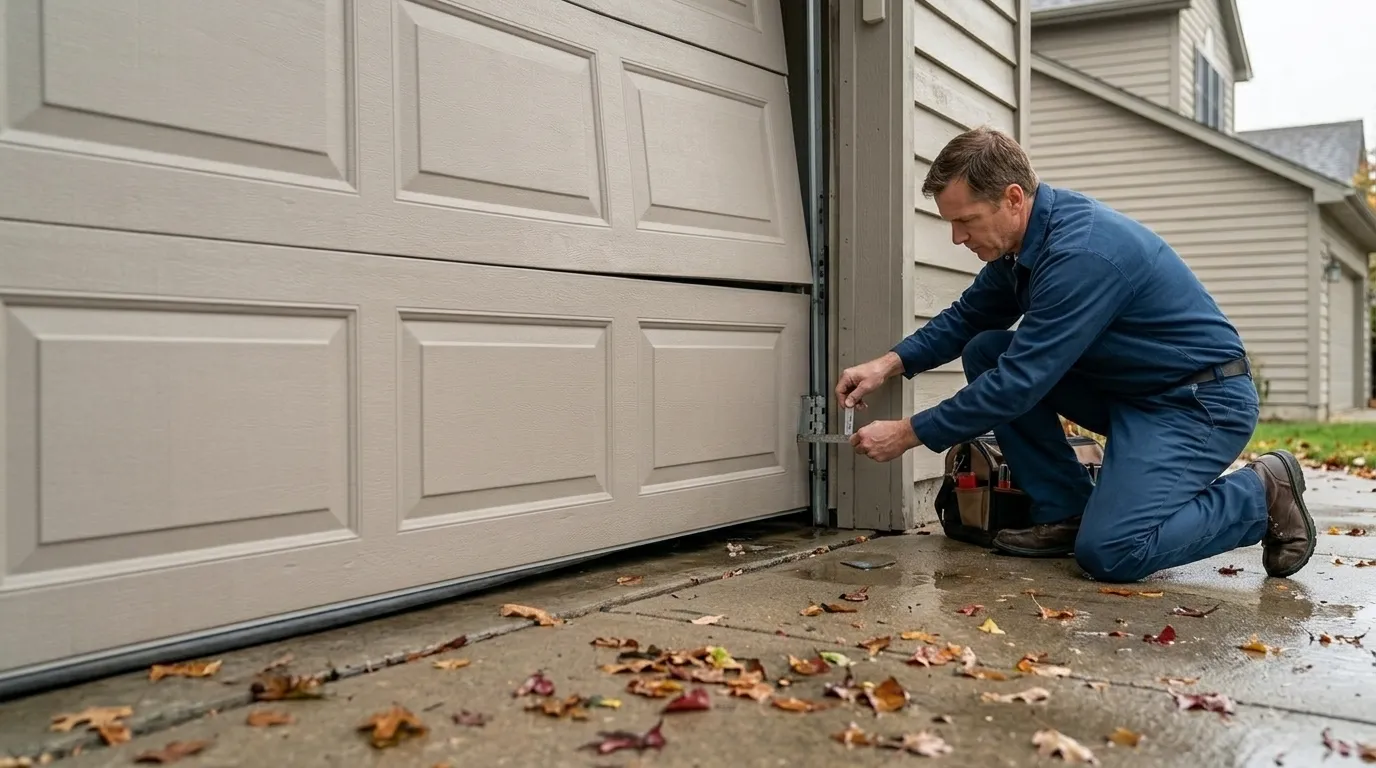
Worn rollers on Tampa's 1980s-90s housing stock bind, jump track, and grind loud in the humidity. We replace them and explain what's actually failing.
What Happens When You Call
-
1
Call or Request a Quote
Tell us what the door is doing and roughly how old the house is - that alone points us toward the likely part before a truck leaves.
-
2
On-Site Diagnosis
A tech checks the spring, cables, tracks, and opener in person and tells you plainly what is actually wrong.
-
3
Straight Price, No Surprises
You get a number before any work starts. It covers parts and labor, nothing added after the fact.
-
4
Fixed the Same Visit
Most repairs are done in one trip. If a part needs sourcing, we tell you that upfront instead of guessing.
Why This Fails Locally
Most of the houses we work on in the Tampa service area went up between 1968 and 2011, with the bulk of that stock dating to the 1980s and 90s. That generation of builder-grade doors almost always shipped with nylon rollers on steel stems, sized for a door that was going to sit in a garage that stays warm and humid nearly year round. Tampa's mild temperate climate doesn't freeze anything, but it doesn't dry anything out either.
The moisture that sits in a garage all summer works into the roller bearing, washes out factory grease, and lets grit stick to the stem. You get the same failure whether the house is in an area built in the 90s stock we see across dozens of neighborhoods in this service area, or in the newer construction closer to the 2011 end of that range. The roller doesn't rust through and stop - it wears unevenly, so the door starts riding crooked in the track before it ever fully quits.
That's the part homeowners usually miss: a bad roller doesn't announce itself as a roller problem. It shows up as a door that seems to have a spring or opener issue instead.
Doing It Yourself
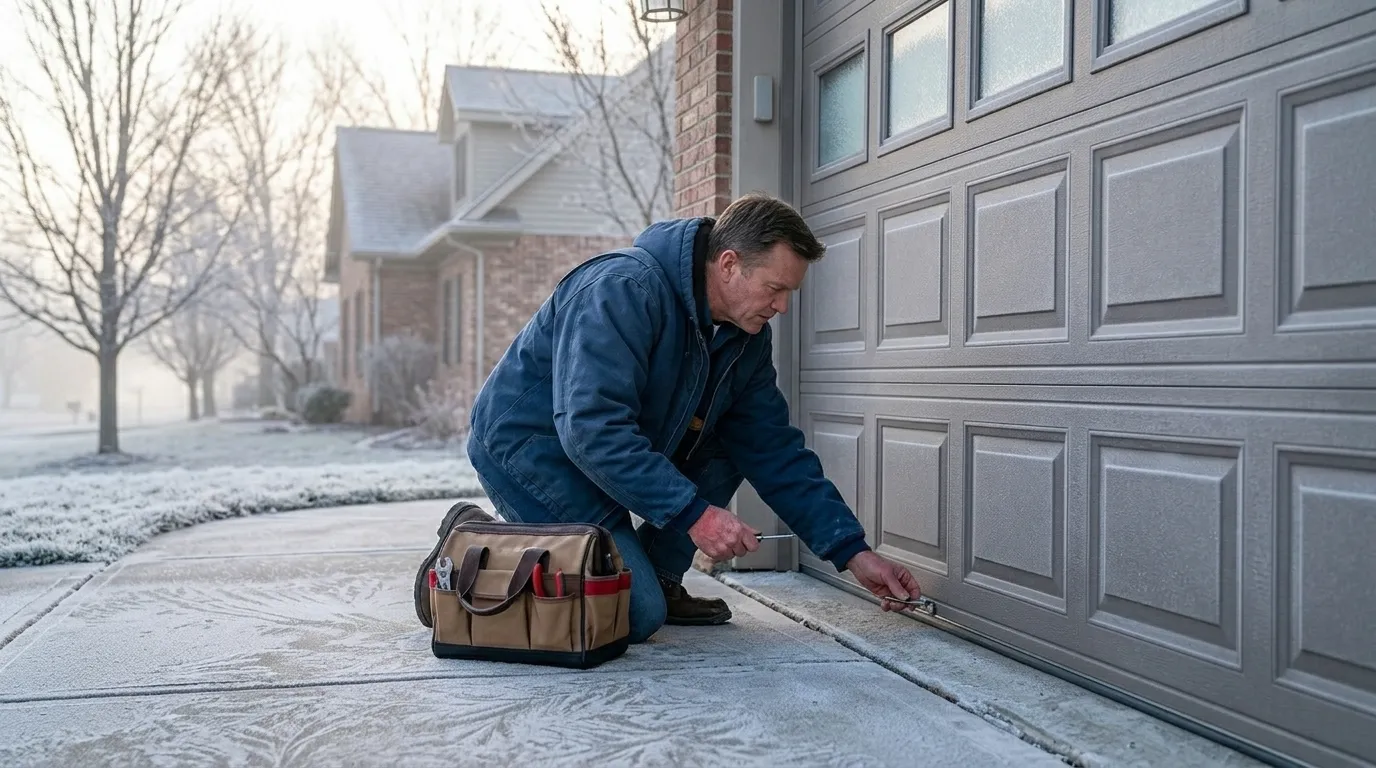
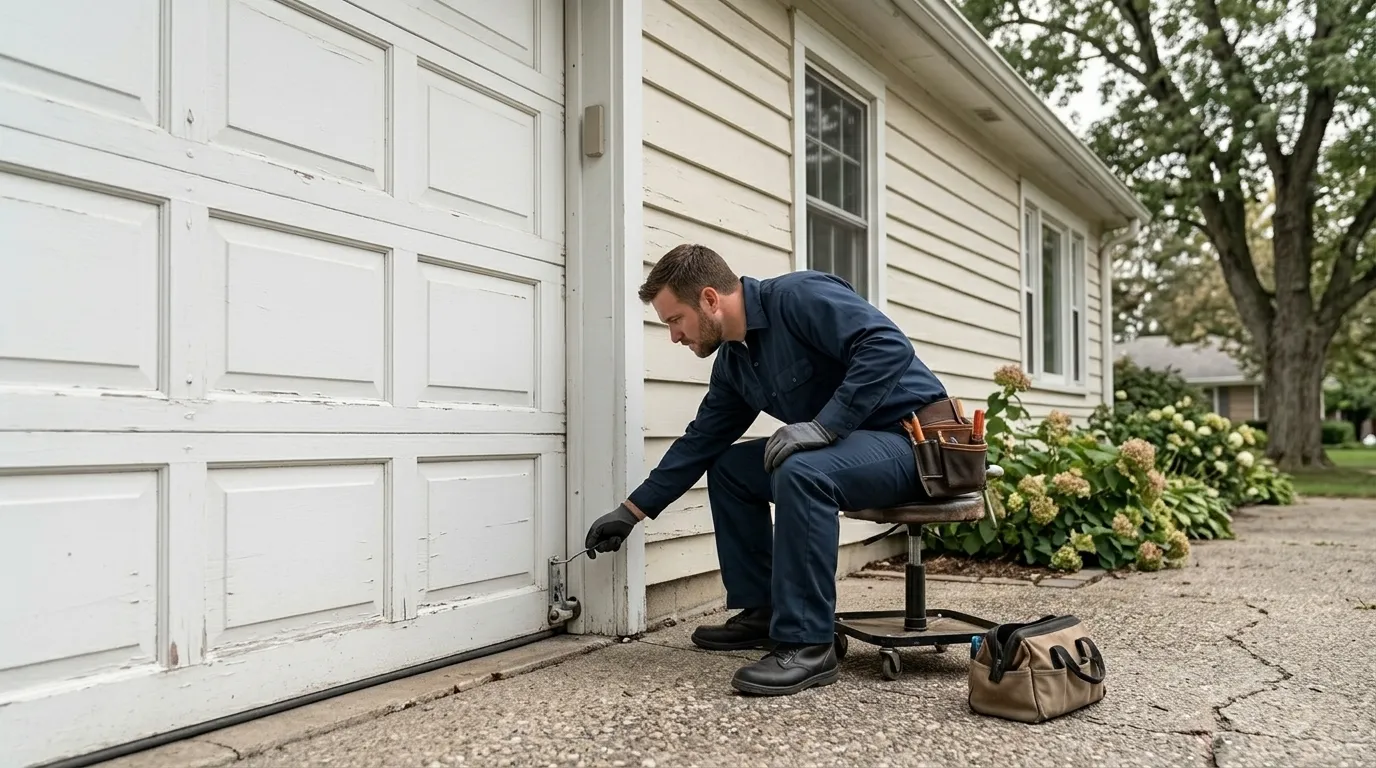
Swapping a single roller is one of the more reasonable DIY jobs on a garage door, and we'll say that plainly. If the door still opens and closes and you can get the bottom bracket loose without disturbing the cable, replacing one nylon roller with the door in the down position and unplugged is within reach for most people. What isn't reasonable is doing this on a door with a broken spring under tension, or replacing rollers on the top section where the track is close to the header and the stakes for a slipped hand are higher.
We also see people replace the roller but not the track section it was riding in - if the track has worn a groove or bent slightly from years of a dragging roller, a new roller just wears the same way in a few months. If you're not sure which rollers are original 1990s-era steel-stem units versus a mismatched replacement from a past repair, that's worth a look before you order parts.
How Long You Are Without the Door
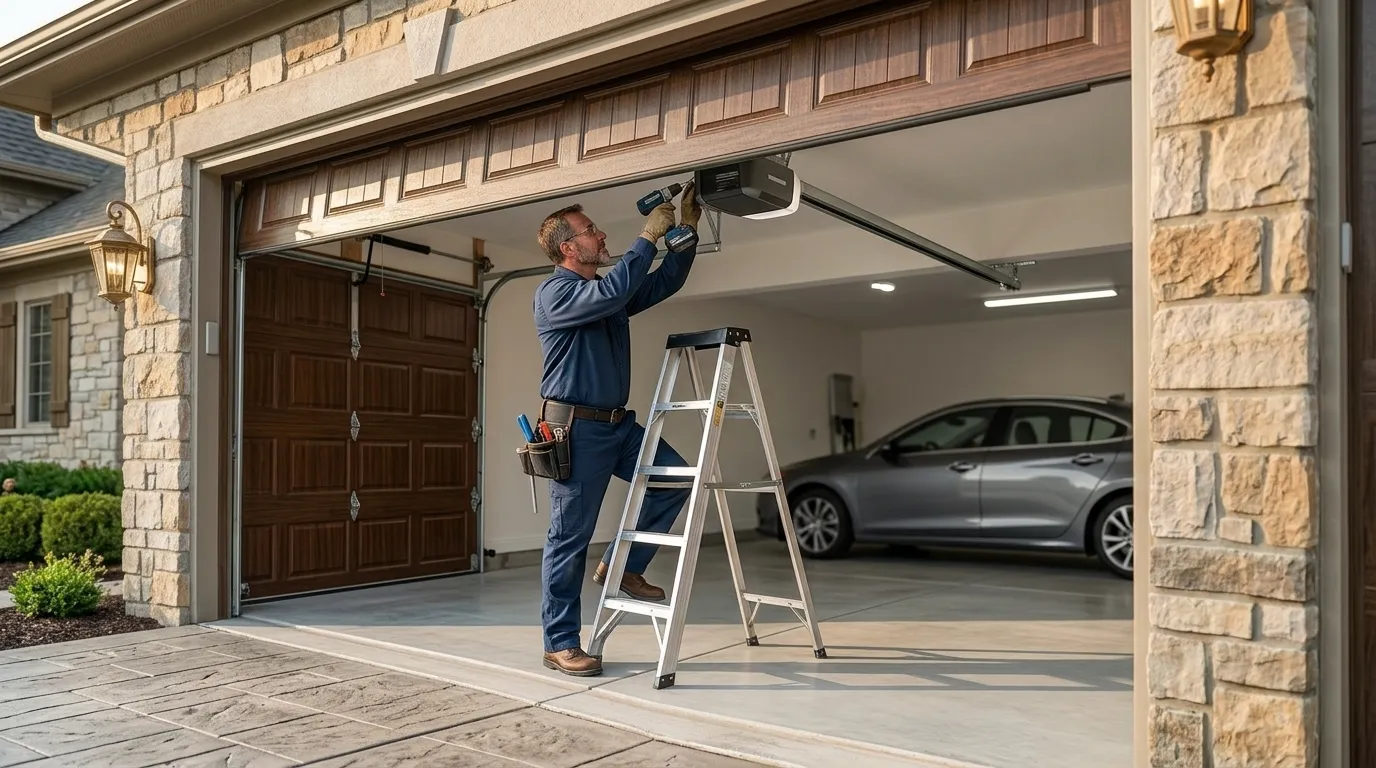
A straightforward roller swap on a single section doesn't take the door out of service for long - it's a bracket-off, roller-out, roller-in job section by section, and the door goes back to normal operation the same visit. It runs longer when more than a few rollers on both sides have worn unevenly, because at that point the track itself often needs adjustment or a section replaced to stop the crooked travel we described above. The honest limit here: if the rollers have been bad long enough that the track has bent or the bottom bracket has torn loose from the panel, that's no longer a roller job, and we'll tell you that instead of forcing a fix that won't hold.
How It Shows Up
The complaint we hear most is noise - a grinding or popping sound as the door travels, worse near the top or bottom of the run. Some homeowners notice the door hesitating or jerking at one specific spot every single time, which usually means one roller is riding on a flat spot instead of rolling. Others see it visually before they hear it: the door looks like it's leaning or twisting slightly as it moves, especially on a wider double door where uneven roller wear on one side shows up as a visible tilt.
None of these mean the opener is failing, even though a jerking, hesitating door often gets blamed on the opener motor first. If the noise or hesitation started gradually over months rather than all at once, that gradual pattern points to roller wear rather than a spring or cable that's about to fail outright.
Why Tampa Calls Us
Talk to a Technician Before You Book
Describe what the door is doing and get a straight answer on what it likely needs.
Jobs Like Yours
Recent work from this service line.
Frequently Asked Questions
How do I know if it's the rollers and not the springs?
A roller problem usually shows up as noise or a jerk at the same spot in the door's travel every time, with the door still opening and closing under its own power. A spring problem feels different - the door gets heavy, won't stay open on its own, or an opener strains and reverses. If the door moves fine but sounds rough, start with the rollers.
Why do garage door rollers wear out faster in Tampa?
Tampa's mild but consistently humid climate means garage air rarely dries out fully, and that moisture works into roller bearings year-round rather than in short seasonal bursts. Combined with a lot of the area's housing dating to the 1980s and 90s with original steel-stem nylon rollers, we see wear patterns that are steady rather than sudden.
Can I replace just one roller instead of the whole set?
Yes, if only one has failed and the rest are still rolling smoothly, there's no reason to replace a full set. But if the door was built in the same era as most of the housing stock we see, the other rollers are usually close behind, and replacing one now often means a second visit for the next one within a year or two.
Need Garage Door Roller Replacement Around Tampa?
Call now for straight answers on cost and timing.