
Service
Garage Door Cable Repair Across Tampa
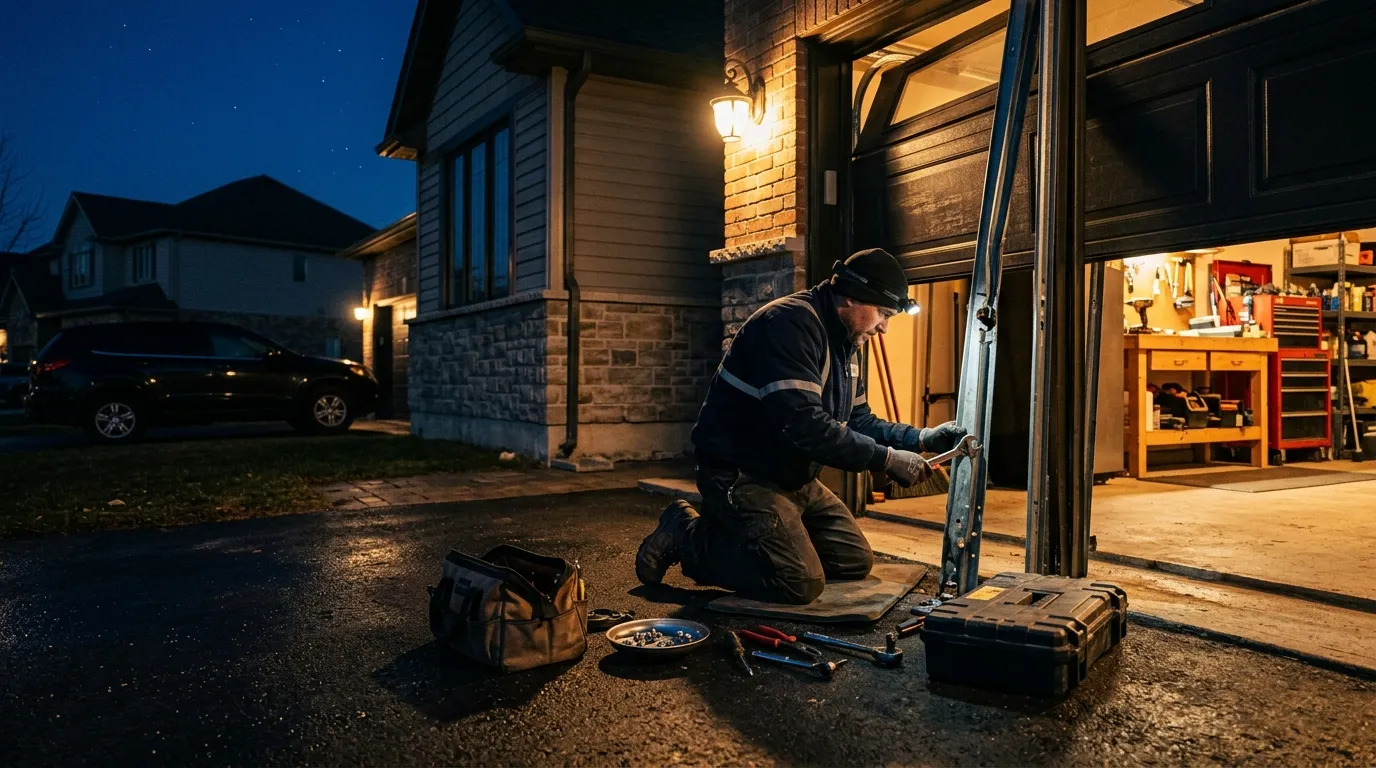
Cable repair for Tampa homes built mostly between 1968 and 2011, where humidity and coastal air wear lift cables faster than the manuals ever expected.
What Happens When You Call
-
1
Call or Request a Quote
Tell us what the door is doing and roughly how old the house is - that alone points us toward the likely part before a truck leaves.
-
2
On-Site Diagnosis
A tech checks the spring, cables, tracks, and opener in person and tells you plainly what is actually wrong.
-
3
Straight Price, No Surprises
You get a number before any work starts. It covers parts and labor, nothing added after the fact.
-
4
Fixed the Same Visit
Most repairs are done in one trip. If a part needs sourcing, we tell you that upfront instead of guessing.
Why This Fails Locally
Most of the housing stock in this service area went up between 1968 and 2011, with the median build year sitting around 1990, and a lot of that came in one wave of 1980s and 90s construction spread across the 32 named areas we work, from Northeast MacFarlane and Drew Park in close to Westchase and Fish Hawk further out. That generation of garage doors used lift cables sized for the original torsion spring setup, and thirty-plus years later those cables are original or close to it in a huge share of these houses.
Tampa sits in a mild temperate band, which sounds like it should be easy on hardware, but mild here still means year-round humidity and salt-tinged air moving in off the bay. Steel cable doesn't rust the way it does up north, in a sudden freeze-thaw snap.
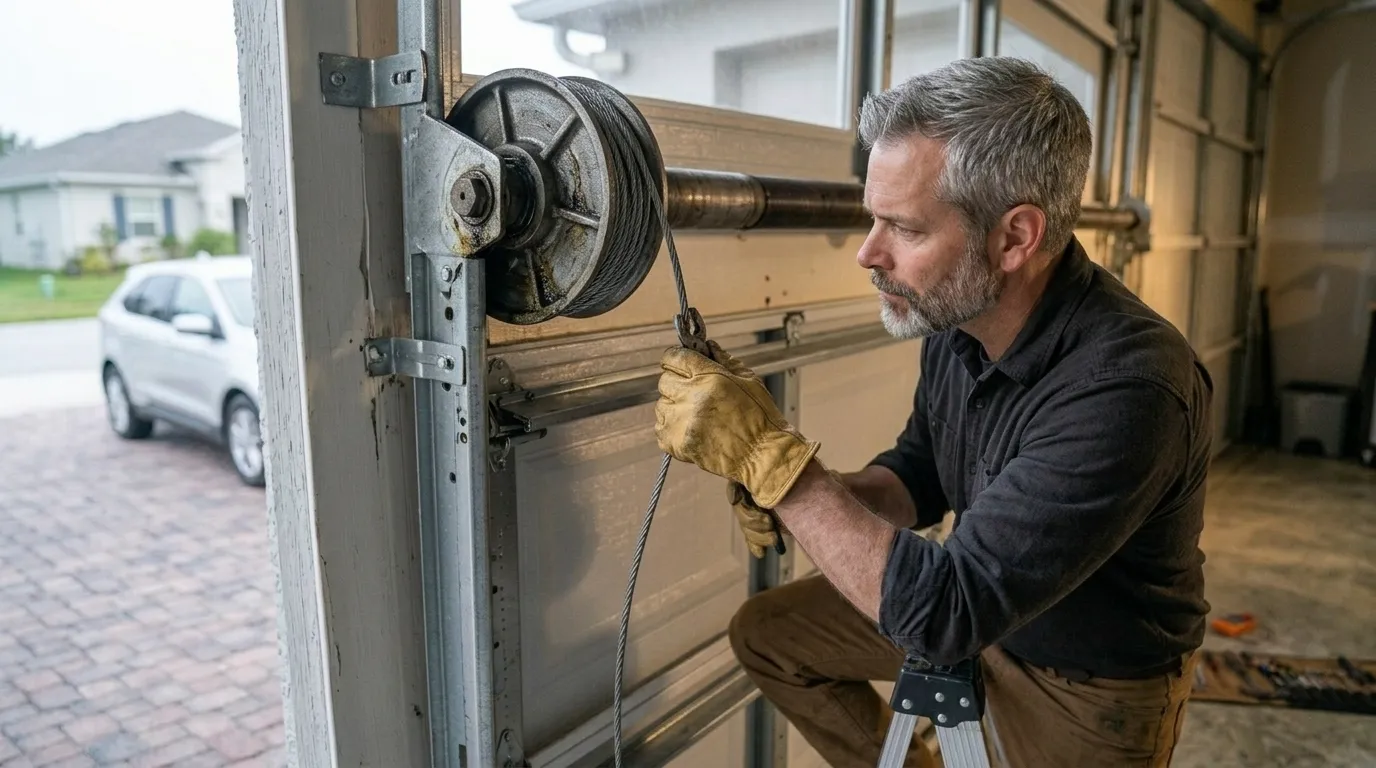
It corrodes slowly, strand by strand, on the inside of the drum where you never look. By the time you see a frayed strand on the outside, the cable has usually already lost a third of its rated strength on the other side.
That slow failure is why cable repair calls cluster in this specific housing stock. Newer builds after 2011 tend to have galvanized cable and better drum tolerances. Older 1980s and 90s doors, especially ones that have never had the cables replaced, are the ones we get called to.
Doing It Yourself
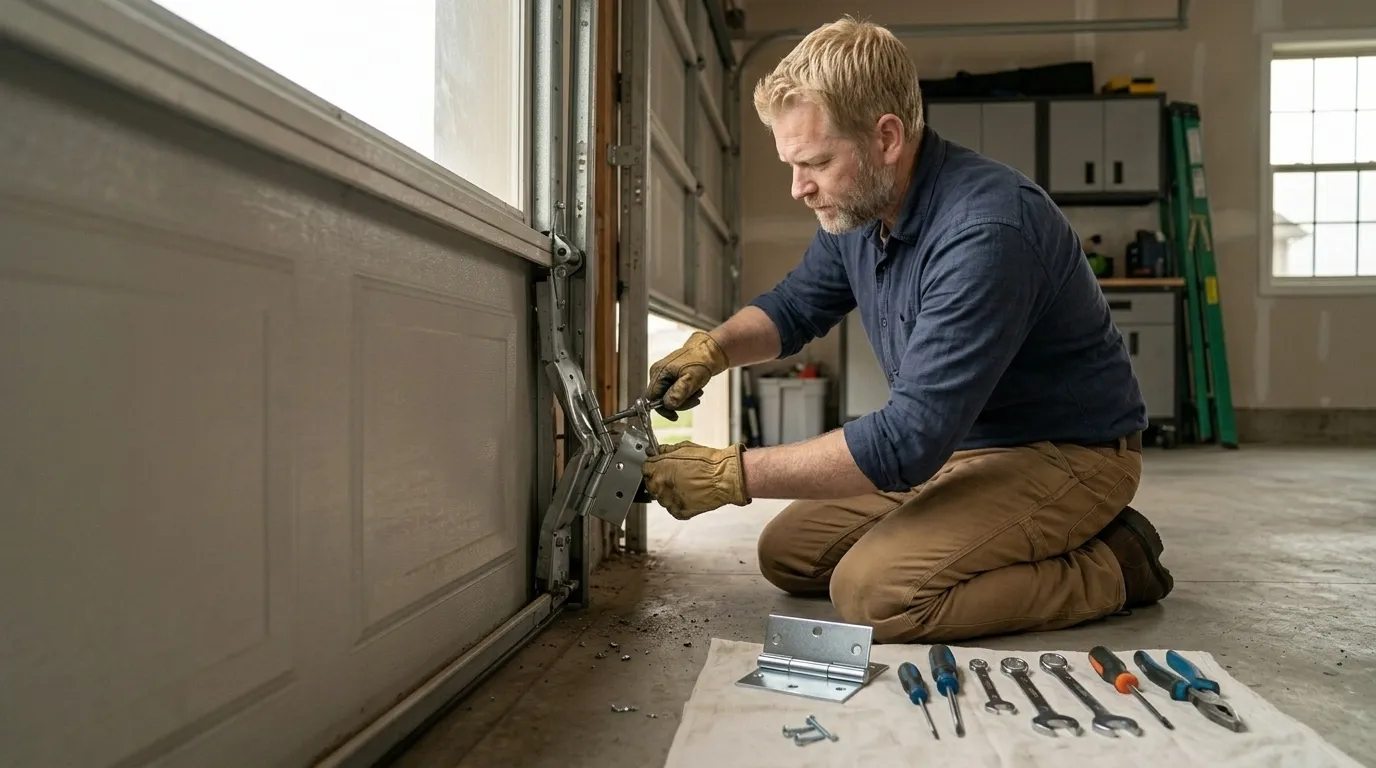
A garage door cable is under real tension even when the door looks like it's just sitting there. If a cable snaps or frays through while the door is up, the door can drop hard and fast on one side, and there's nothing gentle about a hundred-plus pounds of panel coming down unevenly on a track.
We won't talk anyone through replacing a lift cable themselves. This isn't a filter you swap or a bulb you screw in.
The spring on the other end of that cable is storing enough force to do real damage if it lets go while someone's hands are near the drum. If you're at the point where a cable looks frayed, kinked, or has visible rust bloom at the drum end, the safe move is to stop opening the door by the opener and leave it alone until someone can look at the whole assembly, not just the cable.
What you can do yourself: look. Check both cables along their visible length for fraying, flat spots, or rust, especially near the bottom bracket and up top at the drum. If one side looks worse than the other, that's useful information to give whoever comes out, and it often means the door is already running unevenly on the tracks, which wears the rollers and the opener too.
How Long You Are Without the Door
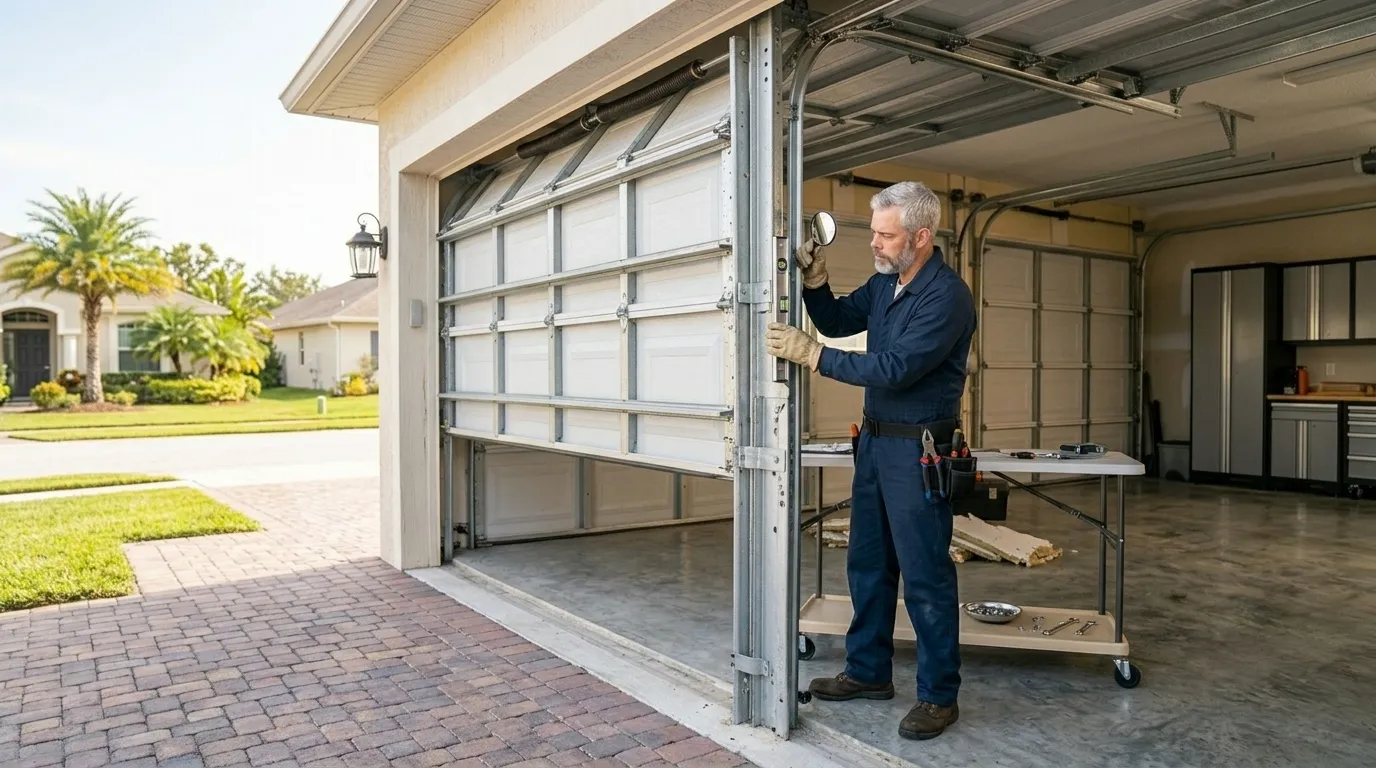
A straightforward cable replacement on a residential door is usually a same-visit job once someone's on site with the right cable length and drums for your door size. The honest limitation here: if the cable failure has already let the door drop and bind on the track, or if it's pulled the drum or bent the shaft, that adds diagnosis time and sometimes a return trip if a part isn't on the truck.
We carry common cable lengths and drum sizes for standard 7-foot and 8-foot residential doors, which covers most of the stock built across this service area's 1980s-90s wave. Custom door sizes or older discontinued hardware sometimes need an order, and we'll tell you straight if that's the case rather than guess.
Either way, a snapped cable means the door is not safe to run on the opener until it's fixed, so plan on the garage being out of use, not just slow, until the repair is done.
How It Shows Up
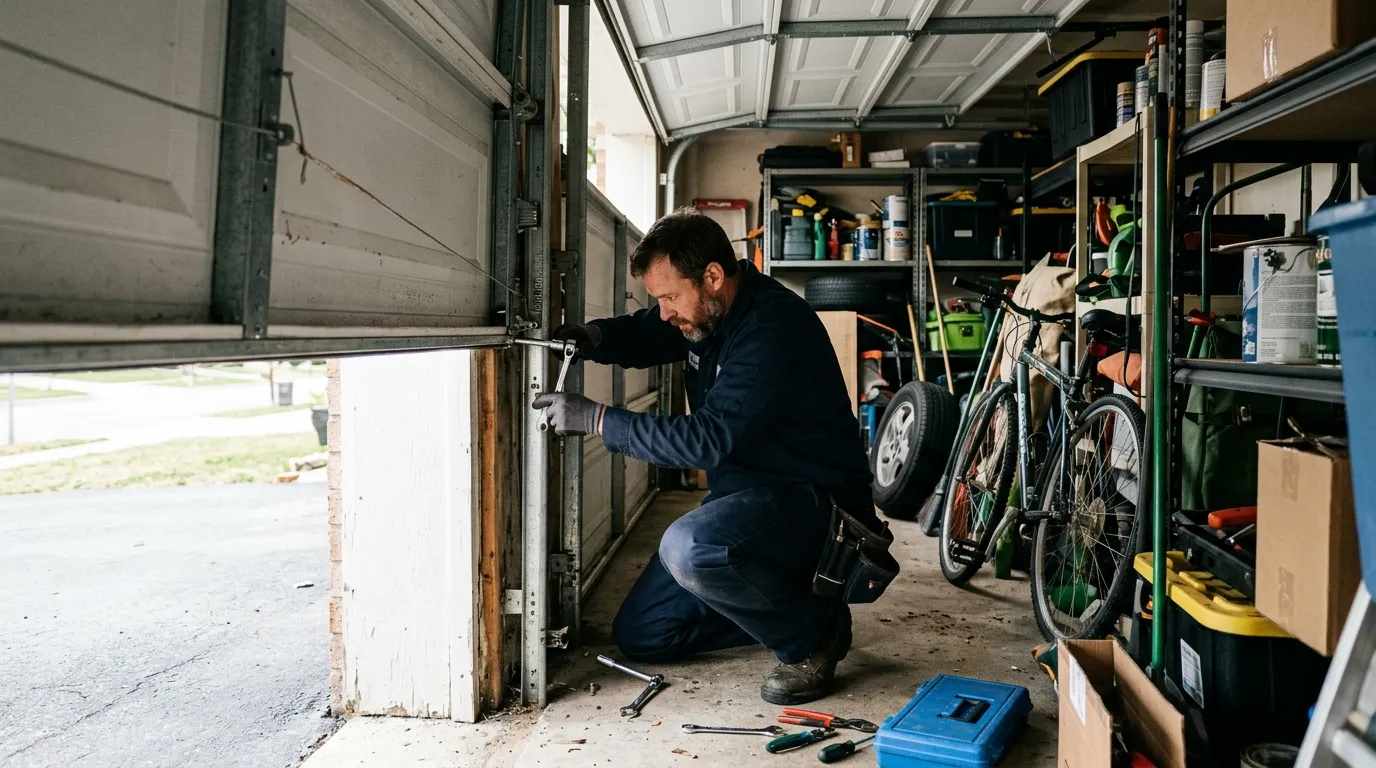
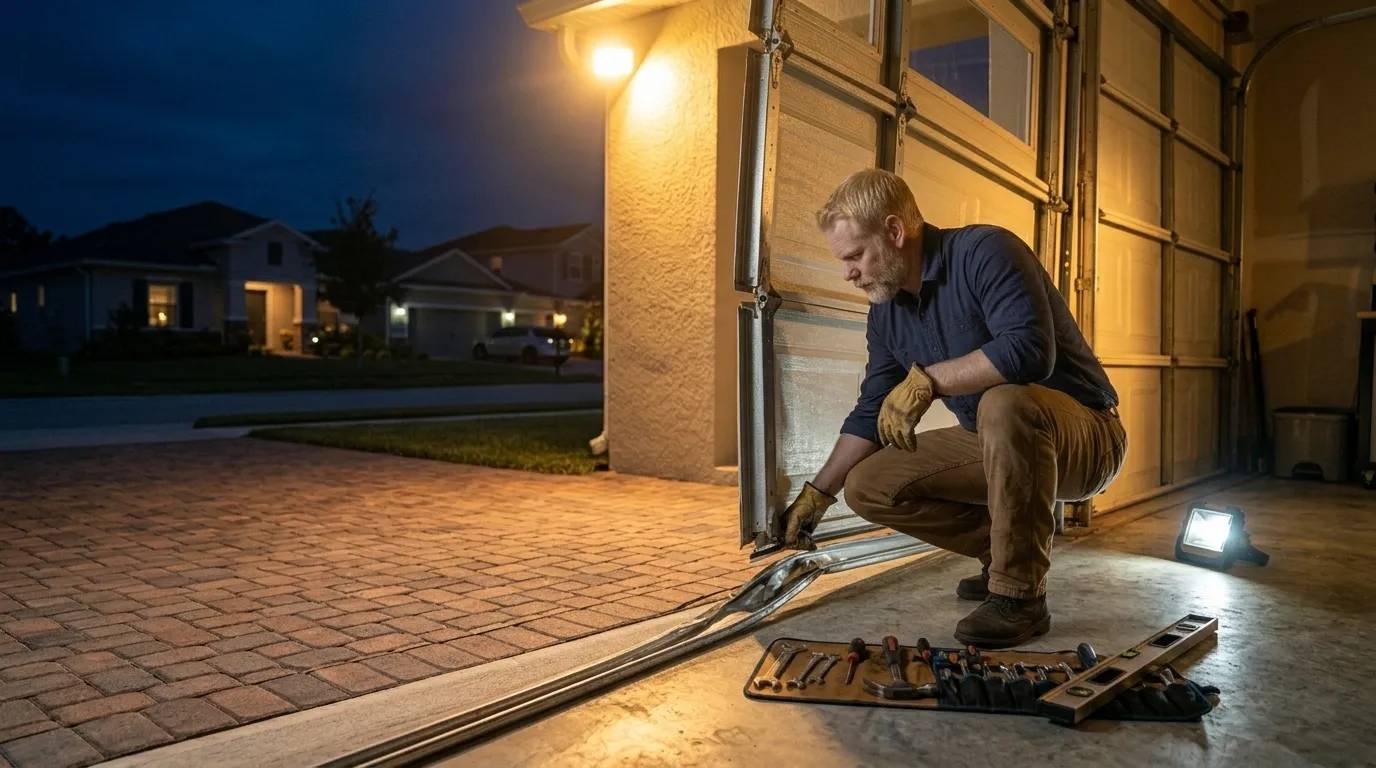
The most common way this starts: the door looks fine going up, then comes down crooked, dragging on one side, or refuses to seat flush at the bottom. Sometimes there's a loud bang first, from a cable letting go under tension, followed by the door sagging on the side where it failed.
Other times it's quieter. You notice the door has been a little slow or uneven for weeks, one corner riding lower than the other, and that's a cable stretching or a strand giving out gradually rather than snapping outright. That gradual version is common in the older end of this area's housing stock, where original cables have been carrying the same load since installation decades ago.
Either way, an uneven door under power is doing damage beyond the cable itself, wearing rollers unevenly and putting side load on the opener's drive gear. Catching it at the fraying stage, rather than the snapped stage, is cheaper and a lot less dramatic.
Why Tampa Calls Us
Talk to a Technician Before You Book
Describe what the door is doing and get a straight answer on what it likely needs.
Jobs Like Yours
Recent work from this service line.
Frequently Asked Questions
Why did my cable snap with no warning?
It rarely happens with no warning, it's just that the warning was internal, on the wound part of the cable at the drum where you can't see it. Corrosion works from the inside out on steel cable in humid climates like Tampa's, so the outside can look fine until the last few strands give.
Is a broken cable the same repair as a broken spring?
No. A cable runs from the bottom bracket up to the drum on the torsion shaft; a spring stores the lifting force. They often fail around the same age of hardware, and a cable job sometimes uncovers a spring that's also near the end of its life, but they're two different parts and two different repairs.
Can I just replace one cable if only one side broke?
Most of the time both cables get replaced together, since they're the same age and under the same load, and mismatched wear on one side often means the other side isn't far behind. We'll look at the actual wear on both before recommending that.
Does the type of door affect the cable used?
Yes, cable length and drum size depend on door height and whether it's a standard lift or high-lift setup, which varies across the older custom builds in this area versus newer standard doors. That's part of why we look at the door in person before quoting a cable job.
Need Garage Door Cable Repair Across Tampa?
Call now for straight answers on cost and timing.